Aloe Vera: The Ultimate Midlife Hydrator
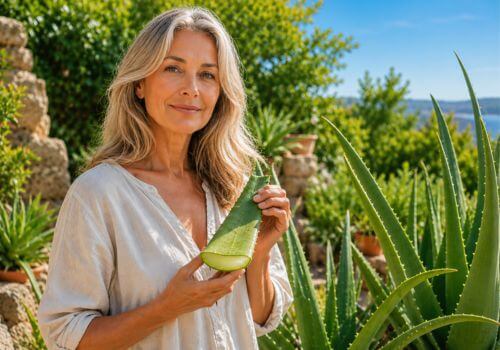
Aloe vera is probably best known for its soothing role in after-sun care, but this versatile plant has far more to offer than simply cooling sunburned skin.
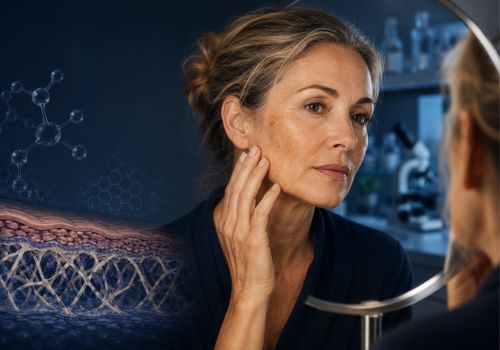
As we move through our 40s, 50s, and beyond, we begin to notice skin changes that can be difficult to ignore. Our skin may feel drier, more sensitive, or seem to take longer to recover after minor injuries or sun exposure.
While many of these changes are a natural part of aging, hormonal changes during menopause and andropause can make them even more noticeable.
In this guide, we’ll explore what aloe vera is, why it has been valued for centuries, what modern research tells us about its potential benefits, and how to use it safely as part of a healthy midlife lifestyle.
What Is Aloe Vera?

Aloe vera (Aloe barbadensis Miller) is a succulent plant that has been valued for thousands of years for its skincare, wellness, and medicinal properties. Although aloe vera is native to the Arabian Peninsula, it is now cultivated in warm climates around the world and commonly grown as a houseplant in cooler regions.
The plant is easy to recognize by its thick, fleshy green leaves, which contain two very different substances.
The first is the clear inner gel that most people associate with aloe vera. It is widely used in skincare products, medical and wound-care products, after-sun treatments, oral care products, and purified aloe drinks.
The second is a thin yellow layer found just beneath the outer skin of the leaf. This substance, known as aloe latex, contains aloin, a naturally occurring compound that acts as a powerful laxative. If not removed, it may cause stomach cramps, diarrhea, or skin irritation.
Not all aloe vera products are produced in the same way. Harvesting and processing methods can influence the quality and composition of the final product.
Understanding the difference between these two parts of the plant is essential. Many of aloe vera’s potential health benefits are linked to the clear inner gel, while most of the safety concerns relate to the aloin-containing latex.
Lillepin Tip: Why Aloe Vera Products Can Vary So Much in Quality and Price
Not all aloe vera products are created equal.
Fresh, hand-harvested aloe vera gel is widely regarded as the premium standard because each leaf can be individually selected and carefully filleted by hand.
Since aloe vera leaves naturally vary in size, thickness, shape, and maturity, careful manual processing allows the clear inner gel to be separated while minimizing contamination from the surrounding latex, which contains aloin.
Some manufacturers process fresh inner-leaf gel, while others use concentrated aloe vera that has been dried into a powder and later reconstituted with water. The final quality depends not only on the raw material but also on how quickly the aloe is processed, the temperatures used, and how well the gel is stabilized to preserve its naturally occurring bioactive compounds.
When choosing an aloe vera product, don’t focus on price alone. Because harvesting and processing methods vary, look for reputable manufacturers that clearly explain where their aloe vera comes from, whether they use fresh inner-leaf gel, and how it is harvested and processed.
Greater transparency is often one of the best indicators of quality.
Remember: A higher price doesn’t automatically guarantee better quality, but understanding how aloe vera is harvested and processed can help you make a more informed choice.
What Makes Aloe Vera So Unique?
At first glance, aloe vera may look like an ordinary succulent, but inside its thick leaves is a remarkably complex mixture of naturally occurring substances. Scientists have identified more than 75 potentially active compounds within the clear inner gel. Rather than acting in isolation, these compounds appear to work together in a unique natural synergy.
These include polysaccharides, amino acids, vitamins, minerals, enzymes, antioxidants, and other plant compounds. Researchers believe this combination—rather than one single “magic ingredient”—is one reason aloe vera has attracted scientific interest for decades.
One of the best-known compounds is acemannan, a naturally occurring polysaccharide that has been studied for its possible role in supporting wound healing, maintaining skin moisture, and interacting with the body’s immune system.
Exactly how these compounds interact within the body is still being investigated, but current evidence suggests that aloe vera’s benefits are likely the result of its many naturally occurring compounds working together rather than the action of a single active ingredient.
This complexity also helps explain why different aloe vera products may not all produce the same results. The concentration of these naturally occurring compounds can vary depending on how the plant is grown, harvested, processed, and stored.
Why Aloe Vera May Become Even More Valuable After 40
As we get older, our skin naturally changes. It gradually produces less collagen, becomes less elastic, and loses moisture more easily. As a result, skin may feel drier, itchier, more sensitive, and slower to recover from everyday wear and tear.
For women, these changes often become more noticeable during menopause, when declining estrogen levels affect skin hydration, collagen production, and wound healing. Men can experience similar changes during andropause, although these changes usually develop more gradually.
Studies have shown that topical aloe vera can support skin hydration, help soothe irritated skin, and assist the skin’s natural repair processes.
At the same time, purified aloe vera juice and concentrated aloe vera wellness shots have become increasingly popular for supporting digestive health and relieving occasional constipation. However, their benefits depend on the product, how it has been processed, and the amount consumed.
While aloe vera cannot stop the natural aging process, it can be a valuable addition to a healthy skincare and wellness routine. In the following sections, we’ll take a closer look at what the research says about its role in wound healing, skin hydration, digestive health, oral health, and several other potential health benefits.
Aloe Vera and Wound Healing: What Does the Research Say?
One of aloe vera’s best-known uses is helping to soothe and support the healing of minor skin injuries. For generations, people have applied the clear inner gel to sunburn, small cuts, scrapes, insect bites, and other minor skin irritations.
Today, aloe vera is used not only in everyday skincare but also in a variety of medical and clinical settings. Certain aloe vera-based dressings and preparations are used to support wound healing following some surgical procedures, burns, and skin irritation caused by radiotherapy, where maintaining a moist healing environment may help the skin repair more efficiently.
This is especially important for people undergoing radiotherapy or cancer treatment. It is important to always check with the medical team before applying aloe vera or any skincare product to treated skin.
Modern research suggests there is scientific support for some of these traditional uses. Studies indicate that topical aloe vera may help speed the healing of certain wounds, reduce inflammation, maintain a moist wound environment, and encourage the skin’s natural repair process.
Scientists believe these benefits are linked to aloe vera’s unique natural synergy of bioactive compounds rather than one single active ingredient. Its polysaccharides, antioxidants, vitamins, enzymes, and other naturally occurring substances appear to work together to support several stages of the healing process simultaneously.
Although the research is encouraging, it’s important to keep expectations realistic. Most studies have focused on minor wounds, burns, and superficial skin injuries, and aloe vera should never replace appropriate medical treatment for deep wounds, infected skin, or serious burns. If a wound shows signs of infection or isn’t healing properly, it’s important to seek medical advice.
Aloe Vera and Skin Hydration

One of the reasons aloe vera has remained a favorite skincare ingredient for decades is its remarkable ability to help the skin retain moisture without leaving a heavy or greasy feeling.
Although the clear inner gel is composed of approximately 99% water, it also contains polysaccharides and other naturally occurring compounds that help attract and retain moisture while supporting the skin’s protective barrier.
A healthy skin barrier plays an important role in reducing transepidermal water loss (TEWL)—the gradual evaporation of moisture from the skin throughout the day. Clinical studies have shown that topical aloe vera can improve skin hydration while helping reduce erythema (skin redness), supporting its long-standing use in moisturizers and after-sun products.
As we age, and particularly during menopause and andropause, the skin barrier often becomes less effective, leaving the skin feeling dry, tight, and more easily irritated.
Regular application of aloe vera can help replenish moisture, leaving the skin feeling softer, smoother, and more comfortable. Because well-hydrated skin naturally appears plumper and more supple, consistent use may also help the complexion look healthier and more radiant.
Although aloe vera is an excellent hydrator, it works best as part of a complete skincare routine. Combining aloe vera with daily sun protection, good hydration, a balanced diet, and ingredients such as hyaluronic acid can help maintain healthy, resilient skin throughout midlife.
Supporting your skin from within through a nutrient-rich diet and adequate protein intake also provides the building blocks needed for healthy collagen production.
Aloe Vera and Oral Health
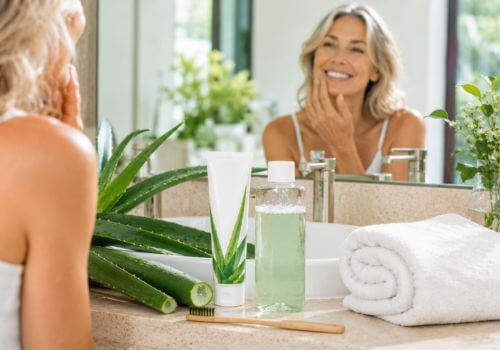
Most people think of aloe vera as something you apply to your skin, but it has also been widely studied for oral health. Aloe vera is now found in a growing number of toothpastes, mouthwashes, oral gels, and other dental care products because of its soothing and moisturizing properties.
Research suggests that aloe vera may help soothe irritated gums, reduce dental plaque, support the healing of mouth ulcers, and improve overall oral comfort.
Some studies have even found that aloe vera mouthwash can perform similarly to certain conventional mouthwashes in reducing plaque and gingivitis, although more long-term research is still needed.
As we get older, maintaining good oral health becomes increasingly important for both women and men. During menopause, declining estrogen levels can contribute to dry mouth, sore gums, changes in taste, and a greater risk of oral health problems.
Keeping the mouth well hydrated is important not only for comfort but also for maintaining healthy teeth, gums, and the natural balance of bacteria that help protect the oral cavity. Since the mouth is the gateway to the digestive system, good oral health also plays an important role in overall well-being.
In men, age-related changes in testosterone may also influence the health of oral tissues and saliva production, although these changes usually develop more gradually. You can learn more in our guide to menopause oral health.
Although aloe vera may help support oral health, it should be viewed as a complement rather than a replacement for good oral hygiene, regular brushing and flossing, and routine dental check-ups.
Aloe Vera Juice and Digestive Health

Most people know aloe vera as a skincare ingredient, but it has also become a popular wellness drink in the form of purified aloe vera juice and concentrated aloe vera shots. These products are commonly used to support digestive comfort and relieve occasional constipation, although the strength of the scientific evidence varies depending on the specific use, product quality, and preparation method.
One important distinction is that only purified inner-leaf aloe vera products are intended for consumption. As we discussed earlier, the yellow latex surrounding the gel contains aloin, a powerful natural laxative that can cause stomach cramps, diarrhea, and other unwanted side effects if it has not been properly removed.
For people experiencing occasional constipation, purified aloe vera juice may help stimulate bowel movements, which is one reason it has traditionally been used as a natural remedy. However, because of its laxative effects, it should not be relied upon as a long-term solution, and frequent constipation should always be discussed with a healthcare professional.
Researchers are also exploring whether purified aloe vera may help support gut health by interacting with the gut microbiome and helping maintain a healthy intestinal environment. This area has attracted growing scientific interest because the gut microbiome is increasingly recognized as playing an important role in digestion, immune function, inflammation, and hormone regulation—areas that become particularly relevant during midlife.
If you choose to drink aloe vera juice, look for products made from purified inner-leaf gel that are labelled as decolorized or aloin-free. Since aloe vera products can vary considerably in quality and composition, choosing a reputable manufacturer and following the recommended serving size is just as important as choosing the product itself.
Aloe Vera and Eye Health
Aloe vera is also increasingly being used in ophthalmic products for eye health. Researchers have investigated aloe vera as an ingredient in certain eye drops and ophthalmic preparations, particularly for dry eye disease, where its moisturizing and soothing properties may help improve comfort and support the health of the eye’s surface.
Early research has also explored aloe vera’s potential role in supporting cornea healing and reducing inflammation of the eye’s surface, although these applications remain an active area of research. They should only involve products specifically formulated for ophthalmic use.
Never apply ordinary aloe vera gel directly into the eyes. Only sterile eye products specifically developed for ophthalmic use should be used, and persistent eye irritation or vision changes should always be assessed by an eye care professional.
Aloe Vera and Inflammation
One reason aloe vera continues to attract scientific interest is that many of its potential benefits appear to be connected by a common theme: inflammation.
Inflammation is the body’s natural response to injury and infection, and in the short term, it plays an essential role in healing. However, as we get older, low-grade, persistent inflammation can become more common. This process, sometimes referred to as inflammaging, has been linked to many of the changes associated with aging, including slower wound healing, dry skin, joint stiffness, metabolic changes, and declining immune function.
Rather than acting like a conventional anti-inflammatory medication, aloe vera appears to work in a more complex way. Researchers believe that its polysaccharides, antioxidants, vitamins, enzymes, and other naturally occurring compounds may work in synergy to help support the body’s normal inflammatory response.
This may help explain why aloe vera has been studied across such a wide range of areas rather than for just one single condition. Scientists are still investigating exactly how these effects occur.
Although the research is encouraging, much remains to be learned. Aloe vera should be viewed as one part of a healthy lifestyle rather than a cure-all. A balanced diet, regular physical activity, quality sleep, stress management, and avoiding smoking all play far greater roles in helping to keep inflammation under control as we age.
Aloe Vera and Immune Health
Researchers are also exploring aloe vera’s potential role in supporting immune health. Although aloe vera is not primarily known as an immune booster, research suggests that its many naturally occurring compounds may help support the body’s natural defence mechanisms and normal immune function.
Aloe vera’s many naturally occurring components appear to work together to support a wide range of processes throughout the body, including wound healing, skin health, and normal immune function.
Although the findings are encouraging, more high-quality human studies are still needed. Aloe vera should therefore be viewed as one part of a healthy lifestyle rather than a substitute for the foundations of good health.
Eating a balanced diet, staying physically active, getting enough sleep, managing stress, and avoiding smoking remain the most important ways to support a healthy immune system.
How to Choose the Right Aloe Vera Product
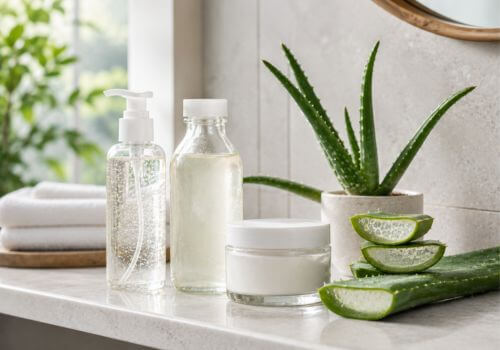
With so many aloe vera products available, choosing the right one can feel overwhelming. Gels, creams, juices, drinks, capsules, and concentrated shots all serve different purposes, so the best choice depends on how you intend to use aloe vera.
For skincare, look for products that list aloe vera (Aloe barbadensis Miller) or aloe vera leaf juice among the first ingredients. A higher aloe vera content generally means you’re getting more of the plant’s naturally occurring compounds, although other ingredients in the formula also influence the final product.
If you’re buying aloe vera juice or wellness shots, choose products made from purified inner-leaf gel rather than whole-leaf extracts. Look for labels such as decolorized, purified, or aloin-free, which indicate that the irritating yellow latex has been removed.
Whenever possible, buy from manufacturers that clearly explain where their aloe vera is grown, how it is harvested, and how it is processed. Gentle processing and proper stabilization help preserve the plant’s naturally occurring bioactive compounds while reducing unwanted contaminants.
Finally, remember that the most expensive aloe vera product is not always the best, just as the cheapest is not necessarily the best value. Reading the ingredient list, understanding how the product is made, and choosing a reputable manufacturer are often more important than the price tag.
A word of caution:
Buying very inexpensive aloe vera products from unfamiliar online sellers or marketplaces can be tempting. However, if a manufacturer provides little or no information about where the aloe vera was grown, how it was processed, whether inner-leaf gel was used, or whether the product has been purified and tested, it can be difficult to assess its quality. Whenever possible, choose products from transparent manufacturers that clearly describe their sourcing, processing methods, ingredients, and quality standards.
Who Should Avoid Aloe Vera?
Although aloe vera is considered safe for most people when used appropriately, it is not suitable for everyone. The risks depend on whether aloe vera is applied to the skin or taken by mouth.
People who have a known allergy to aloe vera or other plants in the Liliaceae/Asphodelaceae family should avoid using aloe vera products, as they may experience skin irritation or an allergic reaction.
If you are pregnant or breastfeeding, it is best to speak with your healthcare provider before drinking aloe vera juice or taking aloe vera supplements. Some aloe vera products, particularly those containing aloin, may not be suitable during pregnancy because of their stimulant laxative properties.
People with diabetes who take blood sugar-lowering medication should also seek medical advice before regularly consuming aloe vera products, as aloe vera may influence blood glucose levels and could affect how some diabetes medications work.
If you are scheduled for surgery, tell your healthcare team if you regularly take aloe vera supplements or drink aloe vera juice. Because aloe vera may affect blood sugar levels and interact with certain medications, your healthcare provider may advise stopping it for a period before your procedure.
If you have kidney disease, ongoing digestive disorders, or take medications such as diuretics, blood thinners, or heart medications, it is also advisable to discuss aloe vera supplements or aloe vera juice with your healthcare provider before using them regularly, as interactions may occur.
If you grow aloe vera at home, avoid consuming the fresh leaf unless you know how to properly remove the latex. The yellow sap contains aloin, which can cause stomach cramps, diarrhoea, and other digestive side effects if ingested.
For topical use, it is always sensible to perform a small patch test before applying aloe vera to a larger area of skin, particularly if you have sensitive skin or a history of allergies.
Possible Side Effects
Most people tolerate aloe vera well when it is used correctly, but side effects can occasionally occur.
When applied to the skin, some people may experience mild irritation, redness, itching, or an allergic reaction. If this happens, stop using the product and wash the affected area with water.
When taken by mouth, products containing aloin may cause stomach cramps, diarrhoea, and abdominal discomfort. This is why it is important to choose purified inner-leaf aloe vera products intended for consumption.
As with any natural product or supplement, always follow the manufacturer’s instructions and discontinue use if you experience unwanted side effects.
The Bottom Line
Aloe vera has been valued for thousands of years, and modern research continues to support many of its traditional uses. While it is not a miracle cure, the evidence suggests that high-quality aloe vera may help support skin health, wound healing, oral health, digestive wellbeing, and several other aspects of healthy aging when used appropriately.
The key is choosing the right product for the right purpose. Whether you’re looking for a soothing skin gel, a moisturizing skincare product, or a purified aloe vera juice, quality, processing methods, and proper use matter far more than clever marketing claims or price alone.
Like many natural remedies, aloe vera works best as part of an overall healthy lifestyle. Combined with good nutrition, regular physical activity, quality sleep, and sensible skincare, it can be a simple, natural addition to your midlife wellness routine.
Sometimes, the most effective natural remedies aren’t the ones that promise miracles—they’re the ones that quietly support our health, one day at a time. Healthy aging isn’t about finding one miracle product; it’s about making small, informed choices every day, and aloe vera may be one of them.
Related Lillepin Research
P4-003 → Read the full article: Can Collagen Really Make Your Skin Firmer?
P4-005 → Read the full article: Comparing the Evidence for Treating Sun-Damaged and Aging Skin