Spring Skin Reset After 40: 5 Steps to Prepare Your Skin for the Summer Sun

Spring skincare after 40 often feels different — many women suddenly notice their skin becoming drier, more sensitive, or simply not responding the way it used to.
This isn’t your imagination. As estrogen levels shift, your skin barrier becomes thinner, loses moisture more easily, and takes longer to renew itself. You might notice more dryness, dullness, itching, or even unexpected changes in texture—something many women experience during this phase of life (and often don’t connect to hormones right away). Some women also notice changes in hair growth, including unwanted facial hair on the chin or upper lip.
These changes aren’t limited to the face, either. Many women also notice more visible veins, thinner skin, dry heels, and other signs of aging feet after 40 as collagen and connective tissues change throughout the body.
If that sounds familiar, it’s worth understanding how these changes fit into the bigger picture of hormonal shifts after 40 and the wide range of skin-related menopause symptoms that can show up along the way.
At the same time, spring brings its own challenges. After months of dry indoor air, your skin is suddenly exposed to stronger sunlight, rising temperatures, and environmental stress. This combination can quietly accelerate what’s often called “inflammaging”—a slow, ongoing process where inflammation contributes to skin aging and collagen loss. You can learn more about this in inflammaging and menopause.
But here’s the good news: your skin isn’t failing—it’s adapting.
Spring is actually your reset window. A chance to support your skin in a different way, rebuild hydration, and strengthen its resilience before the peak summer months arrive. And when you work with your skin—rather than against it—you can start to restore that natural glow and softness from within.
Step 1: Gently Renew Your Skin (Without Damaging It)
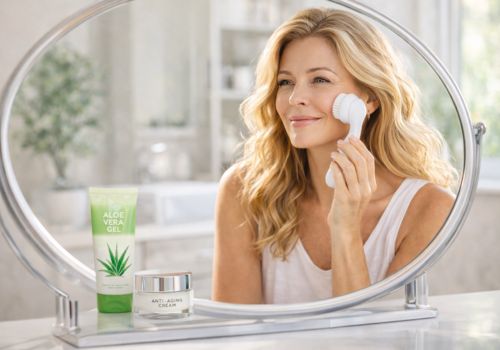
After winter, it’s completely normal for your skin to look a little dull, uneven, or tired. Dead skin cells tend to build up more easily during colder months, especially when your skin is already drier and slower to renew itself due to hormonal shifts.
It might be tempting to scrub everything away—but harsh exfoliation can actually do more harm than good. As your skin barrier becomes more delicate after 40, aggressive scrubs or over-exfoliating can increase sensitivity, dryness, and even accelerate visible aging.
Instead, think of this step as a gentle renewal. Your goal isn’t to force your skin to change, but to support its natural process in a way that feels calm and balanced.
Look for mild exfoliating options like enzyme-based products or newer, gentler acids that help loosen dead skin cells without stripping your skin. This allows fresh, healthier skin to come through while protecting the moisture barrier your skin depends on.
If your skin already feels sensitive or reactive, it’s often a sign that your barrier needs support first. In that case, focusing on hydration and barrier repair—rather than exfoliation—can be the more effective first step, especially when you understand how estrogen influences skin thickness and repair over time.
Lillepin Tip: Think “soft reset,” not “deep peel.” When your skin feels calm and supported, it naturally becomes brighter and smoother—without force.
Step 2: Calm Your Skin by Calming Your Nervous System
Your skin doesn’t just respond to products—it responds to how safe or stressed your body feels.
When your nervous system is under pressure, your body shifts into a protective state. This can increase inflammation, slow down repair processes, and even accelerate the breakdown of collagen over time. In other words, stress doesn’t just affect how you feel—it shows up directly on your skin.
This connection between your brain and your skin becomes even more important after 40, when your body is already adapting to hormonal changes and may be more sensitive to internal and external stressors.
The good news is that small, simple signals can help shift your body back into a more balanced, restorative state—one where your skin can actually repair and regenerate.
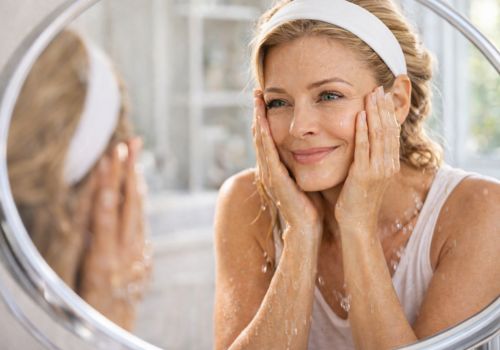
You don’t need a complicated routine. Even a short moment of calm can make a difference. For example, gently splashing your face with cool water, taking a few slow breaths, or lightly massaging the area just behind your ears can help activate your body’s relaxation response before applying your skincare.
If you’d like to explore this deeper, techniques that support your nervous system—like breathwork or gentle regulation practices—can have a surprisingly powerful effect on your skin over time. You can learn more about this connection in the vagus nerve and menopause.
Lillepin Tip: Think of skincare as something you do with your body, not just to your skin. The calmer your system feels, the better your skin can respond.
Step 3: Deeply Hydrate Your Skin (Inside and Out)
After 40, hydration becomes less about how much product you use—and more about how well your skin can actually hold onto moisture.
You might notice that even rich creams don’t seem to “work” the way they used to. This is because your skin loses water more easily over time, a process that becomes more noticeable with hormonal changes and a weaker skin barrier.
That’s why this step is about deep hydration, not just surface moisture.
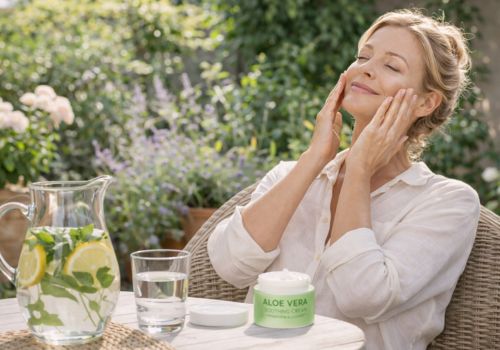
Start by applying hydrating products to slightly damp skin. This simple shift helps your skin absorb and retain more water, giving it a smoother, plumper appearance—without looking shiny or needing heavier formulas.
Look for ingredients that help draw moisture into the skin, such as hyaluronic acid or soothing options like aloe vera, which can hydrate while also calming sensitive or reactive skin. Learn more in our guide to Aloe Vera: The Ultimate Midlife Hydrator.
Hydration also starts from within. Staying well hydrated supports your skin’s elasticity, glow, and overall resilience—something that becomes even more important as your body changes. If you’re curious about how internal hydration can support your skin, you can explore more in hydrogenated water and menopause.
Lillepin Tip: Think of hydration as a two-step process: support your skin from within by staying well hydrated, and from the outside by helping your skin draw in and retain moisture.
Step 4: Build Your Summer Shield (Protect What You’ve Repaired)

As the days get longer, your skin is exposed to more stress—even before summer officially begins. Increased sunlight, rising temperatures, and environmental factors can all contribute to faster skin aging if your skin isn’t properly protected.
This is why spring is the ideal time to shift your focus from repair to protection.
One of the most important steps you can take is applying daily sun protection. UV exposure doesn’t just cause visible damage like age spots and sunspots—it also affects collagen, skin elasticity, and overall skin health over time. If your skin is already showing signs of sun damage, there are several evidence-based ways to support repair and protect it from further damage.
But protection isn’t just about what you apply to your skin—it also comes from what you give your body. Certain foods rich in antioxidants can help support your skin’s natural defense against sun damage from within.
For example, foods like tomatoes, berries (including strawberries), leafy greens, and healthy fats contain compounds that help your skin better cope with UV exposure and reduce inflammation. These nutrients don’t replace sunscreen, but they can add an extra layer of support as your skin adapts to stronger sunlight.
Antioxidants also play a key role in helping your skin defend itself against everyday environmental stress. Ingredients like vitamin C and supportive antioxidants can help neutralize damage and support your skin’s natural repair processes.
Lifestyle factors also play a role—regular alcohol consumption and smoking can increase oxidative stress and accelerate collagen breakdown, making consistent protection even more important.
If you’ve noticed changes in your skin tone or uneven pigmentation, this is also the stage where consistent protection becomes essential. These shifts are often linked to deeper hormonal changes, which you can better understand in how estrogen affects your skin after 40.
Lillepin Tip: Think of sunscreen and antioxidants as your daily shield—quietly protecting your skin so it can stay stronger, smoother, and more resilient over time.
Step 5: Support Your Skin from Within

What you do outside your skincare routine matters—but what happens inside your body matters just as much.
After 40, your skin becomes more dependent on internal support. Collagen production slows down, hydration levels shift, and your skin’s ability to repair itself relies more heavily on your overall health and daily habits. Recent clinical research also suggests that specific bioactive collagen peptides may help improve objectively measured skin firmness and hydration when taken consistently over several weeks.
This is why true skin resilience isn’t built through products alone. It’s supported through sleep, nutrition, hydration, and gentle circulation—factors that work quietly in the background but have a visible impact over time.
Your skin does most of its repair work at night. When sleep is disrupted, that repair process is affected, which can show up as dullness, slower healing, or a loss of firmness.
Hydration also matters from within. Drinking enough water supports your skin’s elasticity, glow, and resilience, especially when your skin is already more prone to dryness. If you’d like to explore this angle further, you can read more about hydrogenated water and menopause.
Nourishing your body with the right nutrients also plays a key role. Healthy fats, antioxidants, and collagen-supporting foods help maintain your skin’s structure and elasticity as it adapts to hormonal changes. If you’d like to explore this further, you can learn more about how collagen supports skin during menopause in collagen and menopause.
Even small lifestyle practices, like gentle movement or boosting circulation, can support your skin from within. Techniques such as dry brushing can complement your skincare routine by encouraging blood flow and helping your skin maintain a healthy glow.
Lillepin Tip: Think of your skincare as part of a bigger system. When your body is supported, your skin reflects it—naturally.
Conclusion: Your Skin Isn’t Failing—It’s Adapting

If your skin has been feeling different lately—drier, more sensitive, or less responsive than it used to—you’re not doing anything wrong. Your skin is simply adapting to a new phase of life.
As hormone levels shift, your skin’s needs change. It requires more support, more balance, and often a gentler, more thoughtful approach. When you understand how these changes are connected to hormonal shifts after 40, everything starts to make more sense.
Spring is your opportunity to reset—not by doing more, but by doing things differently. By focusing on gentle renewal, calming your system, restoring hydration, protecting your skin, and supporting your body from within, you create the conditions your skin needs to thrive.
And most importantly, remember this: healthy, radiant skin isn’t about perfection. It’s about resilience, consistency, and working with your body—not against it.
When you support your skin in the right way, that natural glow doesn’t have to be chased—it starts to return on its own.
Related Lillepin Research
P4-003 — Can Collagen Really Make Your Skin Firmer?
A clinical trial found that a specific bioactive collagen peptide improved skin firmness and hydration, with some benefits continuing after supplementation ended.→ Read the full article: Can Collagen Really Make Your Skin Firmer?
P4-005 — Comparing the Evidence for Treating Sun-Damaged and Aging Skin
A comprehensive evidence review found that no single treatment improves every sign of photoaging. Instead, prescription tretinoin, vitamin C, niacinamide, tranexamic acid, and selected dermatological procedures each target different biological processes involved in sun-damaged and aging skin, while consistent sun protection remains essential.
→ Read the full article: Comparing the Evidence for Treating Sun-Damaged and Aging Skin