Foot Care After 40: How to Get Your Feet Ready for Sandal Season
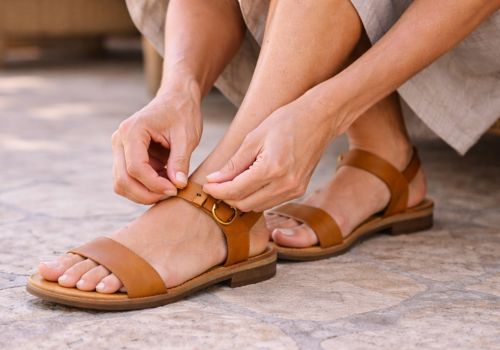
Foot care after 40 often needs a different approach—especially when transitioning from closed shoes to open sandals. Many women and men notice that their feet suddenly feel drier, more sensitive, or less supported than they used to.
We often neglect our feet, even though they’ve carried us since our very first steps. Over time, they quietly adapt to everything we ask of them—yet they rarely get the same care and attention as the rest of our body.
After months in enclosed shoes, your feet are not only adjusting to more exposure—they’re also adapting to deeper changes happening beneath the surface. As menopause progresses and estrogen levels shift, skin becomes thinner and loses moisture more easily, while the natural cushioning on the soles of your feet gradually decreases.
This is also why many people notice more visible veins, prominent tendons, dry heels, and other signs of aging feet after 40.
This means “sandal prep” isn’t just about appearance—it’s about restoring comfort, protecting your skin barrier, and supporting the structure of your feet so they can carry you with ease.
The Overnight Reset
Before we go into the individual steps, there’s one simple technique that supports everything that follows.
One of the most effective ways to deeply hydrate your feet is a gentle “seal and soak” approach. Apply a generous layer of a rich foot cream or ointment, then cover your feet with 100% cotton socks for a few hours or overnight.
This creates a soft occlusive environment that helps your skin absorb and retain moisture more effectively—something that becomes especially important after 40, when the skin barrier is naturally less able to hold onto hydration.
You can use this method at any stage of your routine, depending on what your skin needs.
Step 1: Soften and Reset the Skin
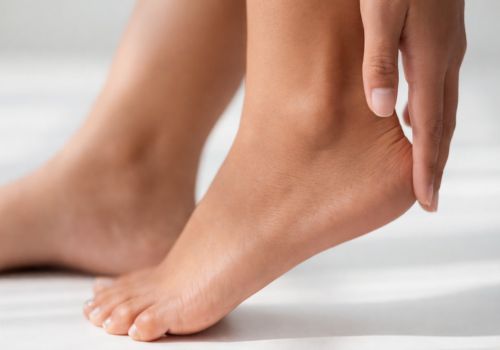
Many women and men notice that changes like dry skin, more brittle nails, or increased sensitivity become more noticeable after 40—especially during seasonal transitions like spring and summer.
After months in closed shoes, it’s completely normal for your heels to feel rough, thickened, or uneven. Dead skin tends to build up more easily when your feet are enclosed for long periods—especially as skin renewal slows down after 40.
At the same time, indoor heating during colder months—especially dry radiator heat—can quietly pull moisture out of your skin. This often leaves the heels drier, more fragile, and more prone to cracking by the time sandal season approaches.
It might be tempting to remove that buildup as quickly as possible. But aggressive methods—like metal rasps or “cheese grater” tools—can actually do more harm than good. These tools create tiny micro-tears in the skin, which can trigger your body to respond by producing even more hardened skin over time. This is often referred to as callus rebound, and it’s one of the main reasons rough heels keep coming back.
Instead, think of this step as a gentle softening process, not removal.
A more effective approach is to start with a urea-based cream (ideally in the 10–20% range). Urea works as a keratolytic, meaning it helps dissolve the bonds between dead skin cells while also drawing moisture into the deeper layers of the skin. This dual action makes it especially helpful for thicker, drier areas like the heels.
Apply the cream once daily—preferably in the evening—for a few days before using any physical exfoliation. As the skin softens, you can then use a gentle glass foot file on dry skin to smooth the surface without damaging the skin barrier.
Some people also use “foot peeling masks” or foot peels that cause the skin to shed over several days. While these can make the feet feel softer, they tend to work more aggressively and can sometimes disrupt the skin barrier—especially if your skin is already dry or sensitive.
If you choose to use one, it’s best to limit it to no more than once every few months, and avoid using it if your skin is already irritated, cracked, or has any small cuts.
It’s also worth planning ahead: the peeling process doesn’t start immediately and can take a few days to become visible. When it does, the skin may shed in visible patches—so it’s best not to use a peel right before you plan to wear open sandals.
Always follow up with deep hydration to support your skin as it recovers. Remember, hydration from within also plays a role.
If your skin feels sensitive, tight, or prone to cracking, it’s often a sign that your barrier needs support first. In that case, focus on hydration before exfoliation—because when the skin is properly supported, it naturally becomes smoother over time.
Lillepin Tip: Think “soften and support,” not “scrub and remove.” When your skin feels calm and hydrated, roughness tends to resolve much more naturally.
Step 2: Repair the Skin Barrier
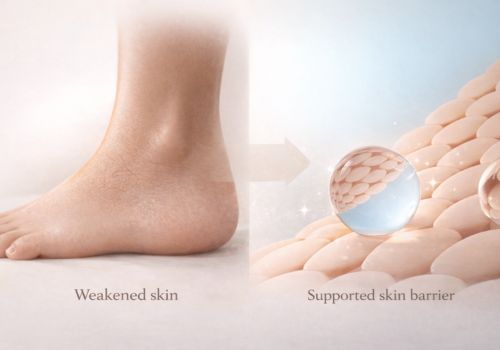
After exfoliation, it’s easy to focus on smoothing the surface—but what really determines how your feet look and feel is the condition of your skin barrier.
This outer layer of your skin acts as a protective shield. It helps retain moisture, prevents irritation, and keeps your skin resilient. After 40, this barrier naturally becomes weaker, meaning your skin loses hydration more easily and takes longer to recover from stress.
This is one of the main reasons why heels can feel dry or rough even when you’re using creams regularly. If the barrier isn’t properly supported, moisture simply doesn’t stay where it’s needed.
Instead of layering more products, the goal here is to restore and seal the barrier.
Look for richer, more nourishing formulas rather than lightweight lotions. Ingredients like ceramides, shea butter, and natural lipids help rebuild the skin’s protective layer and reduce moisture loss over time.
If your feet tend to feel tight, sensitive, or prone to cracking, consistency matters more than intensity. Regular, supportive care helps the skin gradually rebuild its strength—making it softer, more flexible, and less reactive over time.
Lillepin Tip: Before trying to remove dryness, focus on helping your skin hold onto moisture. When the barrier is strong, your skin naturally becomes smoother and more comfortable.
Step 3: Wake Up Your Feet
After months in closed, supportive shoes, your feet can become a little “switched off.”
The small stabilizing muscles in your feet—especially those that support your arch—tend to do less work when they’re constantly supported. As a result, the first days in flat sandals can feel surprisingly uncomfortable, with sensations like tightness, fatigue, or even arch pain.
These changes can also be connected to the way feet naturally shift with age. Some women notice their feet becoming wider, flatter, or suddenly less comfortable in familiar shoes as arches change and support decreases over time. If this sounds familiar, you may also want to read our guide on why feet can seem to get bigger with age during menopause.
This isn’t a sign that something is wrong—it’s simply your body readjusting.
Before stepping fully into sandal season, it helps to gently “wake up” your feet again.
One of the simplest ways to do this is by rolling your foot over a tennis ball or a frozen water bottle for a few minutes each day. This helps release tension in the plantar fascia, improves circulation, and can reduce any lingering stiffness from the colder months.
Another simple way to support your feet is a gentle heel raise exercise. Stand with your feet hip-width apart, slowly rise up onto your tiptoes, then lower your heels back down with control. Even a few repetitions can help activate circulation and support the natural function of your arch.
You can also add small activation exercises like toe spreads. Try gently spreading your toes apart and holding for a few seconds, then releasing. This helps improve balance, stability, and the natural alignment of your foot—something that becomes more important as your footwear becomes lighter and less structured.
If you already experience toe crowding or conditions like hammer toes, gentle activation and choosing well-fitting sandals becomes even more important for comfort.
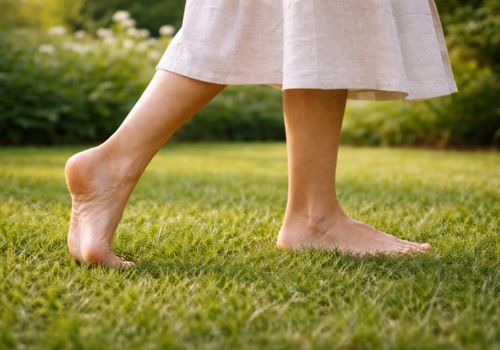
Whenever possible, spend a little time walking barefoot—for example, at home, in the garden, or on safe natural surfaces. This allows your feet to move more freely, improves sensory feedback, and gently reactivates muscles that may have been underused during the colder months.
You can take this a step further by using simple acupressure techniques (Reflexology) on the feet, which gently stimulate specific points and support circulation, relaxation, and overall balance.
Circulation plays a role here as well. After periods of reduced movement or tighter footwear, encouraging blood flow can help your feet feel lighter, warmer, and more responsive again.
This step isn’t about strength training—it’s about reconnecting with your body. When your feet are active and supported from within, they naturally feel more comfortable, stable, and ready for everyday movement. Even simple moments of walking barefoot can create a subtle sense of grounding, helping your body feel more balanced and at ease.
Lillepin Tip: Your feet don’t just need soft skin—they need support. When you gently activate and reconnect with them, comfort often returns much faster than expected.
Step 4: Deep Hydration That Actually Lasts
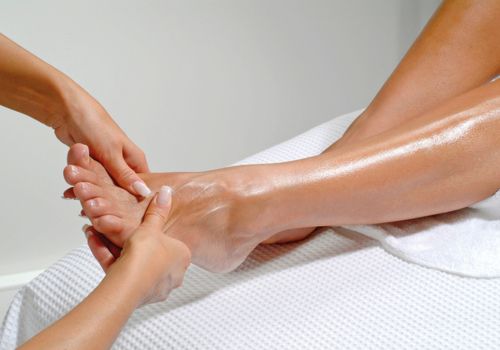
By the time you reach this step, your skin is smoother, and your feet are more active—but without proper hydration, those results won’t last.
After 40, your skin loses moisture more easily and has a harder time retaining it. This is especially noticeable on the heels, where the skin is naturally thicker but can become dry, rigid, and prone to cracking if it isn’t properly supported.
That’s why hydration at this stage isn’t about using more product—it’s about helping your skin hold onto moisture more effectively.
Instead of lightweight lotions, look for richer, more supportive formulations. Ingredients like ceramides, shea butter, and natural lipids help strengthen the skin barrier and reduce ongoing moisture loss.
If you tend to experience tightness, dryness, or even mild cramping in your feet at night, you can also look for creams that contain magnesium. Magnesium may help relax the muscles, support circulation, and create a more comfortable feeling before sleep.
Consistency matters more than intensity here. Regular, supportive hydration helps your skin gradually become softer, more flexible, and more resilient—so it stays comfortable even as you transition into more open footwear.
Lillepin Tip: Hydration isn’t just about adding moisture—it’s about helping your skin keep it. When your skin barrier is supported, softness and flexibility follow naturally.
Step 5: Nail Health and Protection
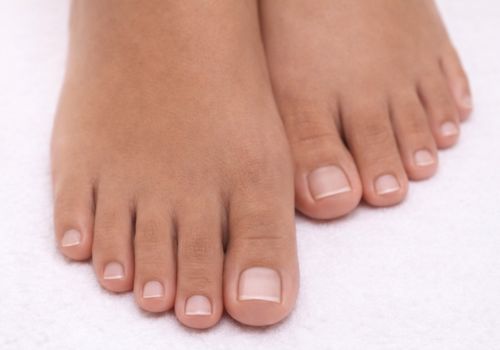
While most of the focus tends to be on the skin, nail health plays an important role in how your feet look and feel—especially after 40.
As nail growth slows down over time, nails can become more brittle, prone to splitting, or develop a slightly uneven texture or color. At the same time, increased exposure to moisture in warmer months—whether from sandals, pools, or humid environments—can make nails more vulnerable to fungal issues.
This is why prevention becomes more important than correction.
Keeping your nails trimmed straight across and gently smoothing the edges helps reduce pressure and prevents small cracks from developing. It also supports a more natural, comfortable shape—especially when transitioning into open footwear. And for men, a decent pair of nail clippers is one of those simple grooming basics worth keeping in the bathroom.
If you regularly visit public pools, spas, or shared changing areas, you may want to take a few simple preventative steps. Keeping your feet clean and dry is the most important foundation.
Some people use natural options like tea tree oil, but it’s important to be cautious—tea tree oil is very concentrated and can irritate the skin if used undiluted or on sensitive areas. If you choose to use it, it should always be properly diluted and tested carefully.
Alternatively, mild antifungal products can offer a more predictable and gentle way to help protect the nail area.
Another simple but often overlooked habit is giving your nails a break from polish. Leaving nails unpolished for a short period before the start of sandal season allows the nail surface to recover and can improve overall strength and appearance.
If a nail is already damaged—such as being split, thickened, discolored, or showing signs of infection—it’s best to avoid covering it with polish, especially long-wear or gel formulas. These coatings can trap moisture and make it harder to notice changes, allowing underlying issues to persist or worsen without being addressed.
This step doesn’t require a complicated routine—just consistent, gentle care. When your nails are healthy, your feet not only look better but also feel more comfortable and supported.
Lillepin Tip: Think consistency over perfection. Small, regular habits help keep your nails strong, clear, and resilient over time.
Nail Health and Fungal Prevention
Fungal infections are nothing to be embarrassed about—they’re common, especially as we get older, and often simply the result of changes in the skin, nails, and environment rather than anything you’ve done wrong.
As we get older, nails tend to grow more slowly and can become slightly thicker or more brittle, which can make them more vulnerable to fungal infections and slower to recover once affected. Changes in estrogen levels also play a role here, as they can affect skin thickness, moisture balance, and the overall resilience of the nail and surrounding tissue—making it easier for infections to take hold.
Because fungal infections can spread easily—especially in warm, moist environments—it’s worth taking a few simple precautions. This includes both nail infections and common skin conditions like athlete’s foot. Always dry your feet thoroughly after showering, particularly between the toes, and avoid walking barefoot in shared spaces like pools, gyms, or changing rooms. It’s also best not to share shoes or slippers, as fungal infections can transfer through direct contact.
Fungal infections can also be transmitted through shared tools or surfaces, which is why hygiene is especially important when visiting nail salons. Make sure that instruments are properly cleaned and disinfected, and don’t hesitate to ask about their hygiene practices.
While regular manicures are generally low-risk, pedicures require a bit more caution because the feet are more exposed to moisture and potential sources of infection. If you have concerns or notice changes in your nails, seeking care from a qualified podologist or foot specialist can be a safer option.
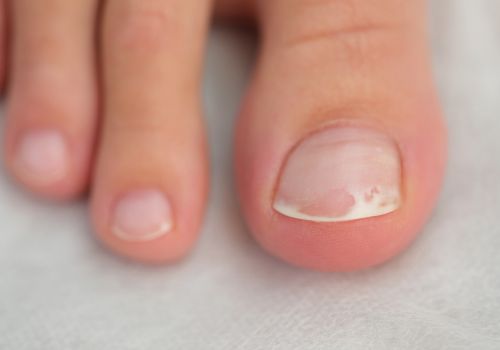
If you notice changes in one nail—such as discoloration, thickening, brittleness, or separation—it’s best not to ignore it. Fungal nail infections can take a long time to resolve, often requiring several months of treatment and additional time for the nail to grow out fully. Addressing it early can help prevent it from spreading to other nails or surrounding skin.
Treatment can sometimes involve prescription medication, which may require medical supervision and monitoring, particularly for longer courses. If you’re unsure or symptoms persist, it’s always best to seek advice from a qualified podologist or your doctor to find the most appropriate approach.
For milder cases, topical treatments may help, but many common home remedies are not always effective once the infection is more established.
Athlete’s Foot: What You Need to Know
Athlete’s foot is a common fungal skin infection that usually affects the areas between the toes, but it can also spread to the soles or sides of the feet. It often shows up as itching, redness, peeling, or small cracks in the skin—especially in warm, moist conditions.
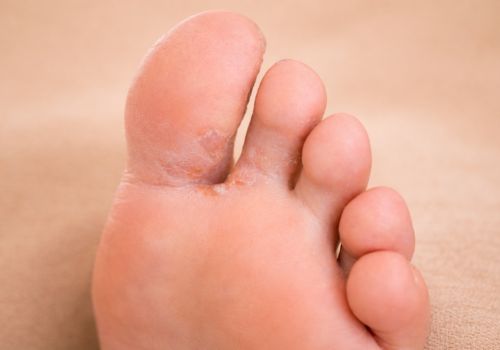
In many cases, it can be managed with over-the-counter antifungal creams or sprays, along with simple habits like keeping the feet clean and dry and changing socks regularly. The key is consistency—treating it early and continuing for the recommended time, even after symptoms improve.
It’s important not to ignore it or try to “cover it up,” as untreated athlete’s foot can spread to other areas of the foot or even affect the nails over time. If symptoms persist or keep coming back, it’s best to seek advice from a healthcare professional to prevent it from becoming more difficult to treat.
Sandal Season Pro Tips
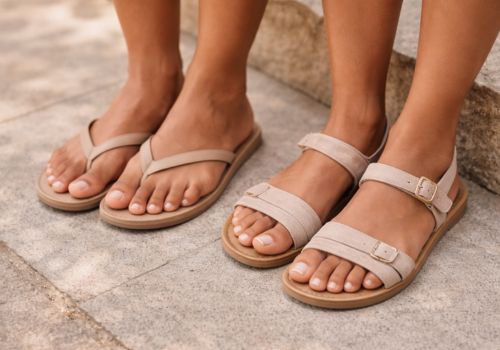
Getting your feet ready for sandals isn’t just about care—it’s also about how you transition into wearing them.
Here are a few simple habits that can make a noticeable difference:
Ease Into New Sandals
Even though sandals are more open than closed shoes, it’s still a good idea not to wear a new pair all day right away. Start with shorter periods so your feet can adjust to the shape, straps, and pressure points.
Don’t Forget Sunscreen
The tops of your feet are one of the most commonly missed areas when it comes to sun protection. Apply sunscreen regularly—especially when wearing open sandals—to help prevent sun damage and uneven pigmentation.
Watch for Strap Friction
With sandals, irritation often comes from straps rather than the heel. Very thin straps can cut into the skin, and styles like flip-flops or toe-post sandals can cause friction between the toes. Make sure straps feel comfortable from the start and don’t rub or press into the skin.
Keep Feet Dry and Comfortable
Warm weather and open shoes can increase moisture and friction. Choosing breathable materials and keeping feet dry can help reduce irritation and lower the risk of fungal issues.
Choose Fit Over Fashion
Straps that are too tight or poorly placed can lead to discomfort, rubbing, and long-term irritation. A well-fitting sandal should feel supportive without pressing or cutting into the skin.
Natural Materials Make a Difference
Whenever possible, choose sandals made from natural materials. On a more holistic level, natural soles can feel more comfortable and allow for a better connection with the ground, while synthetic materials can sometimes feel less breathable and less supportive over time.
In warmer conditions, less breathable materials can also create a more humid environment around the feet, which may increase the likelihood of irritation or fungal issues if moisture builds up. Synthetic materials can sometimes feel less breathable and less supportive over time.
Conclusion

Like the rest of your body, your feet are adapting to a new phase of life.
They’ve carried you through every step, every season, and every stage—often without much attention in return.
After 40, they simply need a different kind of support.
This isn’t about doing more. It’s about doing things more thoughtfully. By gently smoothing the skin, supporting your skin barrier, reactivating movement, restoring hydration, and taking care of your nails, you create the conditions your feet need to feel comfortable, strong, and ready for the warmer months.
And just as importantly, you begin to treat your feet not as an afterthought—but as an essential part of your overall wellbeing.
If your feet need a more thorough reset, it can often be helpful to have them treated by a qualified podologist or foot specialist. They have the right tools and expertise to safely remove buildup, assess nail health, and address concerns that are more difficult to manage at home.
Because when your feet feel supported, everything else becomes a little easier—from how you move to how you feel in your body.
And that’s what this transition into sandal season is really about—not just appearance, but comfort, confidence, and connection with your body.