What Is Andropause? A Simple Guide for Men Over 40

Many men reach their 40s or 50s and start to notice small changes they can’t quite explain. Unfortunately, talking about these issues still seems to be a major hurdle for many. Many men spend years assuming they simply need to work harder, push through, or accept the changes as part of getting older. As a result, some never realize that hormonal changes may be contributing to how they feel.
Have you noticed that the workout that used to leave you energized now takes longer to recover from? That a little extra weight appears around the middle and seems determined to stay, and that your energy isn’t quite what it used to be? That motivation feels different, and even concentration can seem harder on some days?
Most men assume it’s simply part of getting older.
And sometimes it is.
But age isn’t always the whole story.
Behind the scenes, important hormonal changes may be taking place. Testosterone, often thought of as the body’s “male hormone,” naturally declines with age. For some men, this gradual shift can affect energy levels, muscle mass, body composition, mood, sleep, sexual health, and overall well-being.
This process is sometimes called andropause, male menopause, or age-related testosterone decline.
Unlike menopause in women, which usually occurs over a relatively defined period of time, testosterone decline tends to happen gradually over many years. The changes can be subtle at first. This makes them easy to overlook or dismiss.
Understanding what is happening inside the male body can help make sense of these changes and allow you to take practical steps to support your health, energy, and quality of life for years to come.
What Is Andropause?
Andropause is a term used to describe the gradual decline in testosterone that occurs as men age. You may also hear it called male menopause, age-related testosterone decline, or Late-Onset Hypogonadism (LOH).
Unlike menopause in women, which usually involves a relatively rapid decline in estrogen over a period of years, testosterone levels tend to decrease much more slowly, often by around 1% per year after the age of 30.
Because the decline is gradual, many men do not notice the changes right away. Symptoms often develop slowly over months or years and can easily be mistaken for stress, poor sleep, a busy lifestyle, or simply getting older.
Some men may experience:
- Lower energy levels
- Increasing abdominal fat or “man boobs” (gynecomastia)
- Loss of muscle mass or strength
- Longer recovery after exercise
- Reduced motivation or drive
- Brain fog or difficulty concentrating
- Increased irritability
- Lower libido
- Changes in erectile function
- Poorer sleep quality
Not every man will experience these symptoms, and not all symptoms are caused by low testosterone. Some men maintain healthy hormone levels well into later life, while others notice significant physical, mental, and metabolic changes much earlier.
Testosterone influences far more than sex drive and reproductive function. It plays an important role in muscle maintenance, bone strength, energy production, metabolism, mood, cognitive function, and overall health.
This helps explain why the effects of age-related testosterone decline can sometimes feel surprisingly widespread. What may appear to be several unrelated changes can occasionally be different pieces of the same hormonal puzzle.
The good news is that understanding what is happening inside the body is often the first step toward improving how you feel.
Think of It Like This
Think of testosterone like the manager of a football club.
When you’re younger, the manager is active, constantly giving instructions, motivating the players, organizing training, and keeping the team performing at its best.
As you get older, the manager doesn’t suddenly leave the club. Instead, he gradually becomes less involved. The instructions become less frequent, the players aren’t quite as sharp, recovery takes longer, and overall performance starts to slip.
Nothing dramatic happens overnight. The changes are often so gradual that you barely notice them at first.
That’s essentially what andropause is. Testosterone levels slowly decline over time, and because testosterone helps influence muscle, energy, metabolism, mood, sleep, and sexual health, several seemingly unrelated changes can start appearing at the same time.
Why Testosterone Changes After 40
Many men assume testosterone levels work like a simple fuel gauge: either full or empty.
In reality, the system is much more complicated.
As men age, testosterone production naturally begins to slow. However, the amount of testosterone circulating in the bloodstream is only part of the story.
Total Testosterone vs. Free Testosterone
When doctors measure testosterone, they often look at two important numbers:
Total Testosterone refers to the total amount of testosterone in the bloodstream.
Free Testosterone refers to the portion that is actually available for your body to use.
Think of it like a football team.
Having talented players on the bench is useful, but they can only influence the game when they are on the field. Free testosterone is the portion that is actively available to support muscles, bones, metabolism, energy, mood, and sexual function.
The Role of SHBG
A protein called Sex Hormone-Binding Globulin (SHBG) acts like a transport system for hormones in the bloodstream.
As men get older, SHBG levels often increase.
When more testosterone becomes attached to SHBG, less remains available as free testosterone. This means that some men may have testosterone levels that appear “normal” on a blood test while still experiencing symptoms associated with low testosterone.
This is one reason why doctors often look at more than a single testosterone measurement when investigating hormonal symptoms.
The Brain-Testes Communication System
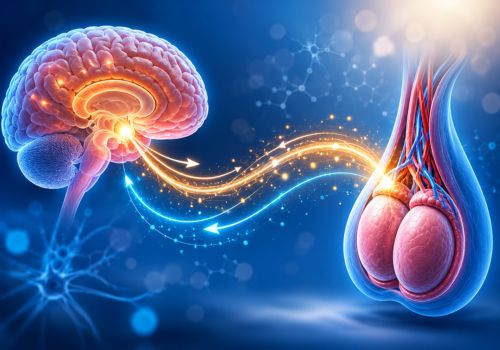
Testosterone production is controlled by a communication network known as the Hypothalamic-Pituitary-Gonadal (HPG) Axis.
In simple terms, the brain acts as the control center, sending signals that tell the testes when to produce testosterone:
- The brain sends signals.
- The testes receive the message.
- Testosterone is produced.
- The brain adjusts production based on the body’s needs.
Over time, this signaling system may become less efficient. The messages from the brain can weaken, and the testes may respond less strongly than they once did.
The result is a gradual decline rather than a sudden hormonal crash.
Why It Matters
Testosterone influences much more than physical strength or sexual health.
Healthy testosterone levels help support:
- Muscle maintenance
- Bone density
- Metabolism
- Blood sugar regulation
- Cardiovascular health
- Mood
- Motivation
- Cognitive performance
This is why age-related testosterone decline can affect many different areas of life at the same time.
The changes may seem unrelated on the surface, but they are often connected through the body’s hormonal communication systems.
What Happens Inside the Body?

Testosterone influences far more than sex drive.
In fact, it acts more like a coordinator, helping multiple systems throughout the body communicate and function efficiently. When testosterone levels gradually decline, the effects can sometimes be felt in surprising places.
Muscle and Strength
One of testosterone’s most important roles is helping maintain muscle mass.
As levels decline, the body may become less efficient at building and repairing muscle tissue. Many men notice that workouts no longer produce the same results they did in their 20s or 30s, even when they continue training regularly.
Over time, this gradual loss of muscle, known as sarcopenia, can affect strength, mobility, metabolism, and overall physical resilience.
Body Fat and Metabolism
Muscle tissue plays a major role in how the body uses energy.
As muscle mass decreases, metabolism can slow, making it easier to gain weight and harder to lose it. Many men first notice this as increasing fat around the abdomen, sometimes called “middle-aged spread.”
While diet and activity levels remain important, hormonal changes may also contribute to shifts in body composition during midlife.
Energy and Motivation
Testosterone helps regulate energy production and influences several neurotransmitters involved in motivation and drive.
Some men describe the change as feeling less sharp, less driven, or simply less interested in activities they once enjoyed.
This doesn’t necessarily mean something is wrong psychologically. In some cases, hormonal changes may be contributing to these shifts.
Brain Function
Researchers increasingly recognize that hormones influence brain health throughout life.
Testosterone appears to play a role in attention, memory, processing speed, and mental clarity. As levels decline, some men report symptoms often described as “brain fog,” including difficulty concentrating, forgetfulness, or reduced mental sharpness.
These symptoms can also be influenced by sleep, stress, and overall health, which is why it is important to look at the bigger picture.
Bone Health
Many people associate osteoporosis with women, but men can also lose bone density as they age.
Testosterone helps maintain healthy bone remodeling and strength. Lower levels may contribute to a gradual decline in bone density, increasing the risk of fractures later in life.
This is one reason doctors often consider bone health when evaluating long-term hormonal health in men.
Think of It Like This
Think of testosterone as the manager of a football club.
Most people assume the manager only deals with one part of the team. In reality, a good manager influences everything—training, tactics, fitness, recovery, motivation, communication, and overall performance.
If the manager gradually becomes less involved, you don’t just notice one problem. The players may lose fitness, recovery may slow down, motivation can drop, and results may suffer across the board.
Testosterone works similarly. It doesn’t control just one part of the body. It helps influence muscle, energy, metabolism, mood, brain function, bone health, and recovery.
That’s why low testosterone can sometimes feel like a collection of unrelated problems when, in reality, they may all be connected.
Signs and Symptoms of Andropause
Not every man experiences andropause in the same way.
Some notice physical changes first. Others become aware of changes in mood, energy, or motivation. For many, the symptoms develop gradually over several years, making them easy to overlook or attribute to stress, work, family responsibilities, or simply getting older.
Physical and Metabolic Changes
Many of the most noticeable symptoms involve changes in body composition and physical performance.
Common signs include:
- Increasing abdominal fat, especially around the waist
- Fat redistribution, including gynecomastia (“man boobs”)
- Loss of muscle mass and strength
- Reduced exercise performance
- Longer recovery after physical activity
- Persistent fatigue
- Reduced stamina and endurance
- Lower energy levels throughout the day
- Changes in hair growth or hair density
- Reduced bone density over time
Many men are surprised to find that they are exercising just as much as before but seeing fewer results.
Cognitive and Emotional Changes
Testosterone also influences brain function and emotional wellbeing.
As hormone levels change, some men report:
- Difficulty concentrating
- Brain fog
- Forgetfulness
- Reduced mental sharpness
- Increased irritability
- Lower motivation
- Reduced confidence
- Mild depressive symptoms
- A feeling of being less engaged or enthusiastic than before
These symptoms can have many causes, including poor sleep, chronic stress, and certain medical conditions. However, hormonal changes may sometimes be part of the picture.
Sexual Health Changes
Changes in sexual health are often among the most discussed symptoms of andropause, although they are not always the first signs to appear.
Some men experience:
- Reduced libido
- Less interest in sex
- Changes in erectile quality
- Fewer spontaneous morning erections
- Reduced sexual satisfaction
- Delayed recovery after sexual activity
These changes can be influenced by hormones, but they may also be affected by cardiovascular health, medications, stress, sleep quality, and relationship factors.
Quick Reality Check
Having one of these symptoms does not automatically mean you have low testosterone.
Fatigue, weight gain, brain fog, low mood, poor sleep, and reduced libido can also be caused by stress, nutritional deficiencies, thyroid problems, certain medications, depression, or other health conditions.
However, when several of these symptoms start appearing together—particularly fatigue, increasing belly fat, declining muscle mass, lower motivation, and changes in sexual health—it may be worth taking a closer look.
The only way to know whether testosterone is playing a role is through appropriate medical evaluation and blood testing.
How Do You Know for Sure?
Many of the symptoms associated with andropause can also be caused by stress, poor sleep, nutritional deficiencies, thyroid disorders, certain medications, depression, or other health conditions.
Because symptoms can overlap, the only way to know whether testosterone is playing a role is through appropriate medical evaluation and blood testing.
Why Timing Matters
Unlike many other blood markers, testosterone levels naturally fluctuate throughout the day.
They are usually highest in the morning and gradually decline as the day progresses.
For this reason, most doctors recommend testing testosterone before 10:00 a.m. whenever possible. Testing later in the day can sometimes produce misleadingly low results.
What Blood Tests Should You Ask For?

A thorough evaluation often includes more than a single testosterone measurement.
| Test | What It Shows |
|---|---|
| Total Testosterone | The total amount of testosterone circulating in the bloodstream. |
| Free Testosterone | The portion of testosterone that is actually available for the body to use. |
| SHBG (Sex Hormone-Binding Globulin) | Shows how much testosterone is bound and unavailable. |
| LH (Luteinizing Hormone) | Helps assess how effectively the brain is signaling the testes to produce testosterone. |
| Prolactin | Elevated levels can sometimes contribute to hormonal symptoms and low testosterone. |
No single test tells the whole story. Doctors typically consider your symptoms, medical history, and the overall pattern of results rather than relying on one number alone.
Looking at the Bigger Picture
Because testosterone influences multiple systems throughout the body, many doctors also recommend evaluating overall metabolic health.
| Test | Why It Matters |
|---|---|
| Fasting Glucose | Screens for blood sugar problems. |
| HbA1c | Shows average blood sugar levels over the previous 2–3 months. |
| Fasting Insulin | Can help identify insulin resistance. |
| Lipid Panel | Assesses cholesterol and cardiovascular risk. |
| Vitamin D | Important for muscle function, bone health, and overall wellbeing. |
| Thyroid Function Tests | Thyroid problems can sometimes mimic symptoms of low testosterone. |
These tests can help identify other factors that may be contributing to fatigue, weight gain, low motivation, brain fog, or reduced physical performance. Emerging research also suggests that gut health may influence inflammation, metabolism, immune function, and overall well-being, making it another important piece of the healthy aging puzzle.
Don’t Rely on a Single Number
Testosterone levels are only one piece of the puzzle.
Two men with the same testosterone level may feel very different depending on their age, body composition, sleep quality, stress levels, overall health, medications, and other hormone levels.
This is why doctors consider both symptoms and blood test results when evaluating possible testosterone deficiency.
The Goal Is Understanding
Getting tested is not about finding something wrong.
It is about understanding what may be affecting how you feel.
Whether the cause turns out to be testosterone, sleep, stress, metabolism, nutrition, thyroid health, or something else entirely, identifying the underlying factors is often the first step toward feeling better.

What Actually Helps?
While testosterone naturally declines with age, lifestyle habits still play a major role in how men feel and function.
1. Prioritize Resistance Training
Strength training helps maintain muscle mass, supports metabolism, improves blood sugar control, and promotes healthy aging.
Examples include:
- Squats
- Deadlifts
- Rows
- Push-ups
- Resistance band exercises
- Weight machines
The goal is not to train like a professional athlete. Consistency matters more than intensity.
2. Eat Enough Protein
Protein provides the building blocks needed for muscle repair, recovery, and healthy aging.
Good sources include:
- Fish
- Lean meats
- Poultry
- Eggs
- Greek yogurt
- Beans and lentils
- Tofu and tempeh
- Nuts and seeds
Aim to spread protein intake throughout the day rather than consuming most of it in a single meal.
3. Include Healthy Fats
Hormones rely on adequate dietary fat.
Good sources include:
- Olive oil
- Avocados
- Nuts
- Seeds
- Fatty fish
The goal is balance, not restriction.
4. Protect Your Sleep
Sleep plays a critical role in hormone production, recovery, metabolism, and overall health.
Poor sleep has been linked to:
- Lower testosterone levels
- Increased hunger hormones
- Higher cortisol levels
- Reduced insulin sensitivity
- Poorer recovery
A consistent sleep routine may have a bigger impact than many men realize.
5. Maintain a Healthy Weight
Excess abdominal fat can influence hormone balance and metabolic health.
Even modest weight loss may improve energy levels, blood sugar control, and overall well-being. For some men living with obesity or type 2 diabetes, healthcare providers may also recommend GLP-1 medications alongside healthy lifestyle changes. These medications are not a treatment for low testosterone, but by supporting weight loss and improving metabolic health, they may help some men feel healthier overall.
6. Manage Stress
Chronic stress can increase cortisol levels and interfere with recovery.
Helpful strategies include:
- Regular exercise
- Walking
- Meditation
- Breathwork
- Time outdoors
- Social connection
7. Check Key Nutrients
Several nutrients play important roles in hormone health:
Correcting deficiencies will not automatically raise testosterone, but it may help support overall health and function.
Focus on the Foundations
Many men immediately look for supplements or quick fixes.
In reality, the biggest improvements often come from strengthening the basics:
- Exercise
- Nutrition
- Sleep
- Stress management
- Healthy body composition
These habits support not only testosterone levels but also cardiovascular health, brain function, metabolism, gut health, inflammation levels, and healthy aging overall.
What About Testosterone Replacement Therapy (TRT)?
For some men with confirmed testosterone deficiency, a doctor may recommend Testosterone Replacement Therapy (TRT).
TRT aims to restore testosterone levels and may help improve symptoms such as low energy, reduced libido, loss of muscle mass, and poor wellbeing in appropriately selected patients.
However, TRT is not suitable for everyone and requires careful medical supervision, regular monitoring, and discussion of potential benefits and risks.
Lifestyle factors such as sleep, exercise, nutrition, and metabolic health remain important whether or not TRT is used.
If you are considering TRT, speak with a qualified healthcare professional who can assess your individual situation and explain the available options. TRT should only be considered after confirmed low testosterone and medical evaluation, not based on symptoms alone.
Final Thoughts: Growing Older Doesn’t Mean Settling for Less
Many men spend years blaming themselves for changes they don’t fully understand.
They assume they need more willpower, more discipline, or simply need to accept that feeling older means feeling worse.
But the reality is often more complicated.
Age-related testosterone decline is a natural biological process, just as menopause is for women. It does not mean something is wrong with you, and it certainly does not mean your best years are behind you.
Understanding what is happening inside your body can help explain changes in energy, strength, body composition, mood, motivation, and overall wellbeing. More importantly, it can help you make informed decisions about your health moving forward.
For some men, the answer may involve improving sleep, nutrition, fitness, or stress management. For others, medical treatment may be appropriate. Most often, it is a combination of factors working together.
The goal is not to turn back the clock.
The goal is to support your body so it can continue performing well for years to come.
Growing older is inevitable.
Losing your health, vitality, and quality of life is not.
The sooner you understand the changes taking place, the sooner you can take practical steps to support your hormones, your metabolism, your brain, your muscles, and your long-term health.
Because healthy aging is not about fighting time.
It’s about working with your body, understanding what it needs, and giving yourself the best possible chance to thrive in the decades ahead.
NOTE: This article is for educational purposes only and is not a substitute for medical advice, diagnosis, or treatment.
Related Lillepin Research
P1-035 → Read the full article: AI Just Revealed a Hidden Truth About Menopause
P1-054 → Read the full article: Scientists Discover a Surprising Connection Between Your Bones and Your Brain
P1-049 → Read the full article: Scientists Finally Start to Understand Menopause Brain Fog
NS-023 → Read the full article: Creatine After 40: Could It Protect Your Muscles and Boost Your Brain?