Scientists Finally Start to Understand Menopause Brain Fog

Menopause Research: Scientists are uncovering how hormonal transitions may influence cognition, focus, and mental clarity.
Lillepin Research Reference
Study Category: Cognitive Health & Neurological Menopause Research
Primary Study: The Lancet Obstetrics, Gynaecology & Women’s Health (2026)
Research ID: P1-049
Menopause brain fog is a common symptom during midlife. Many women describe noticeable changes in concentration, memory, attention, and mental clarity during perimenopause and menopause. These symptoms are often referred to as “brain fog,” although the experience can vary significantly from person to person.
A 2026 review published in The Lancet Obstetrics, Gynaecology & Women’s Health examined the growing scientific evidence surrounding cognitive symptoms during menopause and explored what researchers currently know about these changes.
The review highlights an important shift in menopause research. Cognitive symptoms are increasingly being recognized as a legitimate area of scientific and clinical interest rather than simply being dismissed as stress or normal aging.
What the Researchers Examined
The authors reviewed current evidence on menopause-related cognitive symptoms, including memory difficulties, attention changes, slower processing speed, and executive function challenges.
Executive function refers to higher-level mental skills, such as organizing tasks, managing attention, prioritizing information, and handling multiple demands simultaneously.
They also explored how hormonal changes, sleep disruption, mood symptoms, stress, and other biological factors may contribute to cognitive changes during the menopause transition.
The goal was to better understand why many women report noticeable changes in mental clarity during midlife and what mechanisms may be involved, not to prove that menopause causes severe cognitive decline or dementia.
What the Review Discovered
The authors found that cognitive symptoms during menopause are common and can affect several aspects of cognition, particularly:
- attention,
- working memory,
- verbal memory,
- and processing speed.
However, they emphasized that these changes are often subtle and variable. While some women experience only mild symptoms, others report more significant difficulties that affect daily life or work performance.
The review also noted that cognitive symptoms appear most commonly during perimenopause and the early postmenopausal years, suggesting that hormonal fluctuations may play an important role.
Importantly, they stated that menopause-related cognitive symptoms are not considered equivalent to dementia.
Why Hormones May Affect the Brain
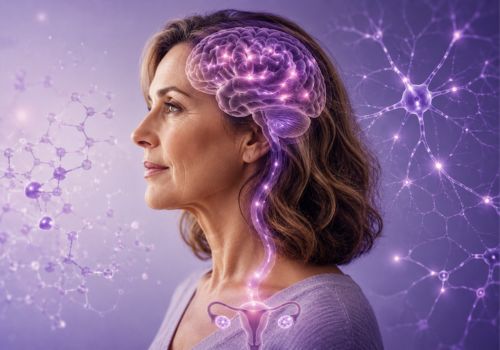
One major focus of the review was the relationship between estrogen and brain function.
Estrogen is involved in several neurological processes related to memory, learning, attention, mood regulation, and communication between brain cells.
The review discussed evidence suggesting that fluctuating and declining estrogen levels during menopause may influence brain regions involved in cognition, particularly areas associated with memory and executive function.
They also noted that the brain’s response to hormonal change is likely influenced by multiple additional factors, including genetics, overall health, cardiovascular risk, sleep quality, stress, and mental health.
This may help explain why some women experience severe brain fog while others notice only minimal changes.
Other Contributing Factors
The review emphasized that cognitive symptoms during menopause do not occur in isolation.
Sleep disturbance, anxiety, depression, and chronic stress may all worsen cognitive function and make symptoms feel more noticeable.
For example, disrupted sleep can affect:
- memory consolidation,
- attention,
- emotional regulation,
- and processing speed.
Similarly, chronic stress and anxiety may increase mental fatigue and reduce concentration.
The research therefore suggests that menopause brain fog is likely influenced by a combination of hormonal, neurological, psychological, and lifestyle-related factors rather than one single mechanism alone. Social factors may be part of the picture too. New research has found an association between loneliness and social isolation and self-reported memory and thinking difficulties during perimenopause.
Another area being studied is whether chronic low-grade inflammation during aging may influence brain function and contribute to changes in mental clarity during menopause.
This connects closely with existing Lillepin articles on sleep disruption during menopause, stress and nervous-system regulation, anxiety during menopause, and more research about whether brain health could be affected by when you eat.
The ADHD and Menopause Connection
The review also discussed increasing interest in the relationship between menopause and attention-related symptoms.
Some researchers believe hormonal changes during menopause may influence neurotransmitter systems involved in:
- attention,
- focus,
- motivation,
- and executive function.
This may help explain why some women report worsening concentration difficulties during perimenopause and menopause, particularly women with existing ADHD or attention regulation challenges.
This topic is explored further in ADHD and menopause and late-recognized ADHD in women.
Questions Researchers Are Still Exploring
The study also highlighted several important research gaps, and the researchers stated that more long-term studies are needed to better understand:
- why some women develop more severe cognitive symptoms than others,
- how long symptoms typically last,
- which biological mechanisms are most important,
- and whether some women may be more vulnerable due to cardiovascular, metabolic, or mental health factors.
The authors also noted that menopause-related cognitive symptoms have historically received less scientific attention than other menopause symptoms, despite being extremely common.
Real-World Implications

One of the most important aspects of this research is validation.
Many women experiencing menopause brain fog report feeling dismissed, embarrassed, or worried about their cognitive changes. The authors support the idea that these symptoms may reflect real biological and neurological changes occurring during the menopause transition.
At the same time, they emphasized that these findings should be interpreted carefully, as they can vary greatly between individuals, and do not suggest severe cognitive decline.
It is important to note that these findings do not suggest that menopause automatically leads to severe cognitive decline. Instead, they suggest that menopause may temporarily affect certain aspects of cognitive performance in ways that vary between individuals.
The Lillepin Takeaway
The growing scientific interest in menopause brain fog reflects a broader change in how menopause itself is being understood.
Cognitive symptoms are increasingly being recognized as a legitimate part of the menopause transition rather than simply being dismissed as stress, aging, or emotional overwhelm.
The current evidence suggests that hormonal fluctuations, sleep disruption, stress, mood symptoms, and neurological changes may all contribute to difficulties with memory, focus, attention, and mental clarity during midlife.
At the same time, more research is needed.
Researchers continue to investigate why symptoms vary so widely between women and which biological mechanisms are most responsible for menopause-related cognitive changes.
What is becoming increasingly clear, however, is that menopause brain fog is a real area of scientific research, one that deserves far more attention than it has historically received.
Related Lillepin Research
P2-044 → Read the full article: Could Your Gut Influence Estrogen? New Research Suggests It Might
P1-054 → Read the full article: Scientists Discover a Surprising Connection Between Your Bones and Your Brain
P2-040 → Read the full article: Your Gut Does Not Stay the Same After Menopause.
P4-015 → Read the full article: Could Your First Period and Menopause Predict How You Age?
P1-097 → Read the full article: Could When You Eat Affect Your Brain Health?
P1-006 → Read the full article: Could Loneliness Affect Memory and Thinking During Perimenopause?
NS-023 → Read the full article: Creatine After 40: Could It Protect Your Muscles and Boost Your Brain?
MW-058 → Read the full article: Could HRT Lower Dementia Risk?