Why Valentine’s Day Feels Different as We Get Older

Table of Contents
Valentine’s Day… The day of love, affection, and emotions. For many, it’s the perfect day to declare their love, propose, or tie the knot. Valentine’s Day has no geographic boundaries; it is the ultimate day of love worldwide.
Whether we like it or not, Valentine’s Day has a strange way of bringing up feelings we often don’t anticipate. It’s a day that is literally impossible to ignore.
Love songs dominate the airwaves, social media provides a continuous stream of romantic reminders, and every supermarket, bakery, gas station, airport, or train station is stocked with Valentine’s gifts. You cannot avoid it, even if you try.
When we’re younger, this day was usually about excitement, anticipation, and that nervous hope of being chosen. But as we get older, Valentine’s Day can start to feel… complicated. For some, it brings gratitude and comfort; for others, it stirs up loneliness, grief, or a quiet sense of “is this really what love is all about now?”
Hormones, life experience, losses, long relationships, divorces, and simply knowing ourselves better all change how we perceive love. This article isn’t about perfect couples, expensive gifts, or pretending everything is wonderful.
It’s about how Valentine’s Day actually feels at this stage of life, why that’s normal, and how we can redefine it in a way that feels kinder, calmer, and more honest.
When We Were Younger: The Valentine’s Day Emotional Rollercoaster

When we were young, Valentine’s Day was big; emotional and charged.
It was more than just a date on the calendar; it was “D-day” to find out if someone chose us, remembered us, or cared about us. Back then, our self-worth was often tied directly to being wanted.
For many of us, the day came with a (sometimes volatile) mix of hope and anxiety. Would there be flowers, a card, or a sign to make us feel special? If nothing arrived, it left us feeling disappointed or even hurt on a personal level, like a quiet confirmation of not being “good enough” or “pretty enough.”
We were surrounded by stories that made it worse. Romantic movies or songs, TV shows, and advertising taught us that real love had to be dramatic, passionate, and visible to everyone else. Grand gestures meant you mattered. Quiet love didn’t seem to count as much.
And when we were in relationships, expectations were sky-high. The day had to be perfect. The partner had to get it right. The disappointment could be just as intense as the excitement.
Looking back, it’s easy to see how much pressure we put on ourselves and on Valentine’s Day, just to prove something about our value, our desirability, and our place in the world.
Why Valentine’s Day Feels So Different After 40

Life doesn’t stand still, and as we age, somewhere along the way, Valentine’s Day quietly changes. It’s a subtle, slow shift that happens as life layers itself on top of us.
By the time we reach our 40s and 50s, we no longer view Valentine’s Day with the same ¨puppy-like excitement and expectations.¨ Our book of life has a lot more chapters. They contain stories on heartbreak, the exhaustion of raising families, the sting of betrayal, or the quiet loneliness that can exist even when someone is sitting right across from you.
Somewhere on our journey through life, we realized that love doesn’t always look the way movies promised. We’ve learned that attraction can be easy, but a real connection takes work, patience, and forgiveness. This can be a hard lesson to learn for someone who dreamt of being the princess who is swept off her feet by her knight in shining armor.
For women in long-term relationships, Valentine’s Day usually feels a lot quieter, less dramatic, and even a little underwhelming. Routines and responsibilities have replaced the excitement of being pursued by a kind of intimacy that doesn’t need proving anymore, but it also doesn’t always get celebrated.
Although the life experiences are similar, single, divorced, or widowed women often experience Valentine’s Day in a completely different way. While some have a big circle of friends who express their value for each other this day, others may feel ¨past the sell-by-date¨ , nostalgic, or even sad. It can highlight absences, stir memories and remind us that Valentine’s Day is something meant only for couples.
In addition, there are our bodies and our hormones.
Perimenopause and menopause don’t just affect our sleep and energy; they also impact our emotions, desire, and sense of closeness. Some women feel less interested in romance and intimacy because of stress, while others feel more sensitive or disconnected from how they used to be.
On a positive note, many women feel more confident with age, freer and more liberated, even if they are´nt always fully aware of it. As we get older, many of us stop measuring our worth by whether someone else chooses us.
We want peace instead of drama, safety instead of intensity, and depth instead of performance. Valentine’s Day shows us what we actually need now, rather than what we were taught to want at sixteen.
The Shift: From Grand Gestures to Quiet Realities
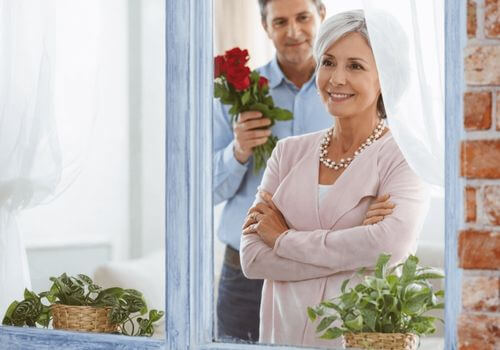
When we’re young, love is loud. Valentine’s Day was often about the statement, the massive bouquet, the fancy restaurant, the social proof that we were desired. At that phase in our life, it fit us perfectly because it was built around the idea that love should be visible, dramatic, and a little bit performative.
But something changes as we get older; love becomes quieter.
After 40, our definition of a “romantic gesture” often shifts. It becomes less about the dozen roses and more about the small, consistent acts of being known:
- The partner who knows exactly how you take your coffee or makes you tea when you’re exhausted.
- The friend who checks in because they know this day is heavy for you.
- Sitting side by side without needing to fill the silence.
- The simple peace of shared routines, shared worries, shared history.
We begin to realize that the most sustainable form of love isn’t a firework; it’s a slow-burning hearth. And because of that, Valentine’s Day can sometimes feel… a bit strange. Not disappointing, exactly, just mismatched.
Many women notice that the big gestures fade. Not because love is gone, but because life is fuller, heavier, more complex. There are careers, aging parents, children, health concerns, mental load, and everyday stressors that weren’t part of the picture before.
Valentine´s Day Romance Evolves
Romance doesn’t disappear; it evolves. However, the uncomfortable truth is that we often still measure today’s love with yesterday’s expectations. We compare a quiet, steady partnership to the fireworks of our early infatuations… And then we wonder why it doesn’t feel the same anymore.
Of course it doesn’t. It’s not supposed to. Early love is fueled by novelty and hormones. Mature love is built on trust, safety, and shared reality. One is intense, the other is deep, and depth rarely looks dramatic from the outside.
This is why so many women feel conflicted around Valentine’s Day. We don’t necessarily want grand gestures anymore, but part of us still wants to feel chosen. We want to be seen, acknowledged, and remembered. Not in a movie way. In a real life way!
And that might look like a thoughtful conversation instead of a box of chocolates. A quiet walk instead of a crowded restaurant. Or simply feeling emotionally held in a season of life that asks a lot from us. The shift isn’t about settling; it’s about redefining what love actually looks like when it’s built to last.
When You’re Single: Reclaiming Valentine’s Day for Yourself

For many single women, Valentine’s Day is hardest not when things go wrong, but when there’s no one there.
Even if you feel generally content with your life, this particular day has a way of highlighting what’s missing. It feels as if the entire world suddenly revolves only around couples.
If you’re single because of divorce, loss, or a relationship that never quite materialized, Valentine’s day can carry grief as well as loneliness. And even if you’re single by choice, it can still feel strangely alienating. It is as if the world is telling you that your life as a single person doesn’t quite count today.
Being Single is not a Failure
However, being single is not a failure. It is not a waiting game for your real life to begin. Still, Valentine’s Day can stir up questions like: Why not me? Did I miss my chance? Will this always be my life? Those thoughts are human. They don’t mean you’re a ¨failure or incomplete¨; you are perfect as you are!
At this stage of life, being single by choice is often a testament to your strength. You aren’t ‘waiting’ for life to begin; you are living it on your own terms, refusing to settle for a connection that doesn’t match the depth of what you offer. You’ve become more honest about what you will and won’t accept. That’s not a lack, that’s discernment.
Choosing Yourself on Valentine’s Day
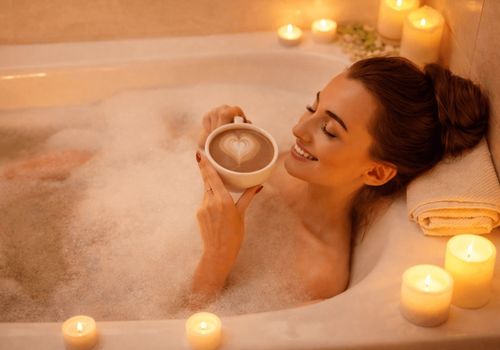
Reclaiming Valentine’s Day means choosing yourself on purpose.
Instead of waiting for someone else to make the day meaningful, you get to treat it as a personal holiday, one centered on care, pleasure, and quiet dignity. When you do that, a day that could have been about absence becomes a day about presence, a gentle reminder of deep rest, kindness toward yourself, pleasure without permission, and comfort without justification.
Here are a few simple but meaningful ways to turn it into your own version of Valentine’s focused on luxury, growth, and genuine enjoyment:
1. The “Five Senses” Staycation.
Create an evening dedicated to sensory pleasure: a luxurious bath, high-thread-count sheets (touch), a beautiful candle (smell), a curated playlist (sound), your favorite dessert (taste), and a visually stunning film or documentary (sight).
2. Write a Love Letter to Your Future Self.
Before V-day, spend twenty minutes reflecting on what you’ve survived, what you’ve built, and what you’re proud of. Seal it in an envelope and open it on Valentine’s Day. It’s a powerful way to witness your own growth.
3. Invest in a “Solo or Friends Date”.
Dress up and go out to watch your favorite performance or show. Take a class just for fun, or go out with friends and celebrate each other. Make it a ritual of giving each other a Valentine’s card saying what makes them special to you.
4. The “No-Algorithm” Afternoon.
Unplug from social media and avoid the comparison trap. Wander through a bookstore, take a long walk, sit in a café. Do things that don’t need to be shared to be real.
5. A “Flower Power” Refresh.
Don’t wait for someone else to send them. Visit a florist and choose a bouquet that fits your home and your mood. It’s a small, beautiful way to claim the day for yourself.
6. The “Just Because” Investment.
Choose a small luxury you’ve been eyeing but haven’t felt justified in buying. High-end skincare, beautiful stationery, a silk eye mask… Buying it for yourself on Valentine’s Day transforms it into a symbol of self-appreciation. You don’t need a special occasion from someone else to treat yourself well.
Meeting Love Where It Is
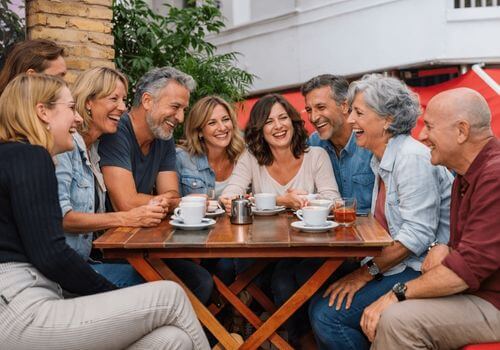
Ultimately, Valentine’s Day doesn’t need to be perfect to be meaningful.
It’s not about having the right relationship status or expressing love in the right way. It’s about recognizing that love, whether it’s quiet and decades-deep, brand new and uncertain, or directed entirely at yourself, deserves to be acknowledged on your own terms.
The day will always carry some cultural baggage. It will always be a little commercialized, a little performative, and for some, a little painful. But it can also be a useful pause, a moment to check in with what matters, to notice who and what you’re grateful for, and to be intentional about how you want to show up. Not because Hallmark says so. Because you decided it was worth it.
Love isn’t something that happens to you once and stays the same forever. It shifts, deepens, quiets down, or asks to be redefined. And the most honest thing we can do on Valentine’s Day is meet it wherever it actually is, not where we think it should be. That’s not settling. That’s living.