Itchy Ears, Scalp, or Skin? It Could Be Menopause Itching

The surprising connection between estrogen, your skin barrier, histamine, and why itching often appears during menopause.
Menopause itching is a surprisingly common symptom during a woman’s transition, yet it rarely receives the same attention as hot flashes, night sweats, or brain fog.
Have you ever had itchy ears or an itchy scalp and wondered why? Perhaps your arms, legs, neck, or back seem to itch for no obvious reason, even though your skin looks perfectly normal.
For some women, it doesn’t stop there. It can feel as though tiny insects are crawling across the skin, a strange sensation that can be unsettling, especially if you’ve never experienced anything like it before.
If this sounds familiar, you’re not imagining it, and you’re certainly not alone.
Itchy skin is a surprisingly common symptom during perimenopause and menopause, yet it rarely receives the same attention as hot flashes, night sweats, or brain fog.
While dry skin can certainly play a role, the story is often more complex. As estrogen levels fluctuate and eventually decline, several changes begin to take place throughout your body.
Understanding why these changes occur is the first step toward finding ways to relieve itching and protect your skin.
What Causes Menopause Itching?
The short answer is that there isn’t just one reason.
Many women assume itching during menopause is simply caused by dry skin, but the reality is more complex. As estrogen levels fluctuate during perimenopause and decline after menopause, several changes take place throughout the body at the same time.
Your skin becomes less resilient, your immune system and histamine response may become more reactive, and your nervous system can become more sensitive to irritation. Together, these changes create the perfect conditions for itching to develop.
The next sections explain exactly how each of these changes contributes to menopause itching.
Your Skin’s Protective Barrier Starts to Change

One of estrogen’s jobs is helping to keep your skin healthy, resilient, and well hydrated. It supports the production of collagen, elastin, natural skin oils (called sebum), and other substances that work together to maintain your skin’s protective barrier.
Think of this barrier as your body’s first line of defense. It helps lock moisture into the skin while protecting it from irritants, allergens, bacteria, and everyday environmental stress.
As estrogen levels begin to decline during menopause, collagen production slows, natural oil production decreases, and the skin gradually becomes thinner, drier, and less elastic. It also becomes slower to repair itself after everyday wear and tear.
Without the same level of protection, moisture escapes more easily and the skin becomes more vulnerable to irritation. This is why products you’ve used for years, such as shampoo, perfume, sweat, chlorinated water, or even changes in temperature, may suddenly leave your skin feeling uncomfortable.
Areas where the skin is naturally thinner, such as the ears, scalp, face, neck, and around the eyes, are often among the first places where these changes become noticeable.
The Estrogen-Histamine Connection
Many people think of histamine as something that’s only involved in allergies, but it actually plays many important roles throughout the body. It helps regulate immune responses, supports communication between cells, and contributes to inflammation when your body detects something it sees as a threat.
Histamine is released by immune cells called mast cells, which are found throughout the body, including the skin. Under normal circumstances, mast cells help protect you by responding to infections, injuries, and allergens.
Researchers have discovered that estrogen and mast cells communicate with each other. Estrogen helps influence how mast cells behave, and changes in estrogen levels may make these cells more likely to release histamine in some women.
When histamine is released, it can cause familiar symptoms such as itching, redness, warmth, swelling, and irritation. This may help explain why some women notice that their skin suddenly becomes much more reactive during perimenopause and menopause, even without an obvious allergy or visible rash.
Scientists are still learning exactly how this relationship works, and not every woman experiences menopause-related itching for the same reasons. However, growing evidence suggests that changes in estrogen and histamine may be one important piece of the puzzle.
Why Do Your Ears and Scalp Itch More Than Other Areas?
If menopause affects your entire body, why do the ears and scalp often seem to itch the most?
The answer lies in the skin itself.
The skin inside your ear canal is extremely thin and produces very little natural oil. Even small changes in moisture or irritation can trigger an itch that feels surprisingly intense. Because the ear canal also contains many sensitive nerve endings, an itch in this small area can be difficult to ignore.
Your scalp faces a different challenge. It’s exposed every day to shampoo, styling products, sweat, heat, and the weather. During menopause, skin that once tolerated these without complaint may suddenly become much more sensitive, leaving your scalp feeling tight, dry, or persistently itchy.
Some women also notice itching around the hairline, eyebrows, eyelids, neck, or upper chest. These areas tend to have thinner or more delicate skin, making them more likely to react as hormone levels change.
For some women, the sensation goes beyond itching. It may feel as though tiny insects are crawling on or beneath the skin, a symptom known as formication. Although unsettling, this sensation is a recognized symptom of menopause and is thought to be related to changes in hormone levels and the nervous system.
You may also find that menopause itching comes and goes. Heat, hot showers, stress, sweating, alcohol, poor sleep, or certain skincare products can all make symptoms worse, although triggers vary from person to person. Stress and anxiety don’t cause menopause itching, but they can make existing itching feel more intense by increasing inflammation and making the nervous system more reactive.
When to Speak to Your Doctor
Not every itch during menopause is caused by hormones. Eczema, psoriasis, fungal infections, allergies, thyroid disorders, diabetes, medication side effects, and skin conditions can all cause similar symptoms. If the itching is severe, persistent, associated with a rash, bleeding, hearing changes, or signs of infection, it’s important to seek medical advice.
What Can Help Relieve Menopause Itching?
Menopause itching can range from a mild annoyance to persistent irritation that interferes with daily life or even disrupts your sleep. Depending on the underlying cause, you may also notice dry or flaky skin, mild redness, or increased sensitivity in the affected area, particularly around the ears or scalp.
Although you can’t stop the hormonal changes of menopause, several simple strategies may help calm irritated skin, strengthen your skin’s protective barrier, and reduce flare-ups.
1. Support Your Skin Barrier
As estrogen declines, your skin needs a little more support than it used to.
Using gentle, fragrance-free cleansers and moisturizers can help restore the skin’s natural barrier and reduce moisture loss. Products designed for sensitive skin are often less likely to trigger irritation.
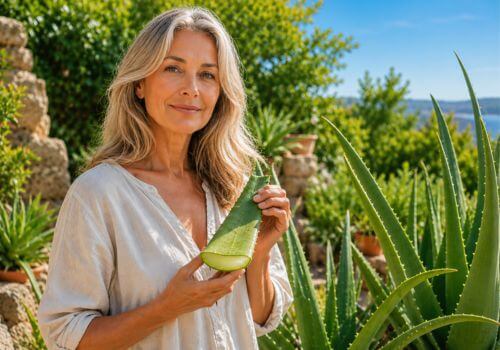
Some women also find that pure aloe vera gel provides a soothing, cooling sensation, particularly during flare-ups or after sun exposure. Although aloe vera won’t address the hormonal changes behind menopause itching, it often helps calm irritated skin and support the skin’s natural moisture barrier.
2. Avoid Common Triggers
Many women find that certain things make itching worse.
Common triggers include:
- Very hot showers or baths
- Harsh soaps or shampoos
- Fragranced skincare products
- Excessive heat and sweating
- Stress
- Poor sleep
Keeping a simple symptom diary may help you identify your own personal triggers.
3. Eat to Support Healthy Skin
Healthy skin starts from within.
A balanced diet that includes adequate protein, healthy fats, and plenty of colourful fruits and vegetables provides many of the nutrients your skin needs to repair and maintain itself.
Omega-3 fatty acids, found in foods such as salmon, sardines, mackerel, walnuts, and flaxseeds, may also help support healthy skin and normal inflammatory responses.
Staying well hydrated is equally important, although drinking more water alone won’t reverse the hormonal changes affecting your skin.
4. If Histamine Seems to Be a Trigger
Some women notice that menopause itching becomes worse after drinking red wine, eating aged cheeses, processed meats, or other foods naturally high in histamine.
While more research is still needed, keeping a food and symptom diary can help you identify whether certain foods seem to trigger flare-ups. Rather than eliminating foods unnecessarily, it’s usually more helpful to look for consistent patterns over time.
5. Don’t Ignore Persistent Symptoms
If your itching is severe, keeps you awake at night, is accompanied by a rash, discharge, hearing changes, bleeding, or doesn’t improve with simple self-care measures, it’s important to speak with your healthcare provider.
Although menopause can contribute to itching, other conditions such as eczema, psoriasis, fungal infections, allergies, thyroid disorders, diabetes, or medication side effects may also need to be considered.
The Bottom Line
If you’ve been struggling with itchy ears, an itchy scalp, or skin that suddenly feels more sensitive than it used to, you’re not imagining it. These changes are a common part of the hormonal transition many women experience during perimenopause and menopause.
Although researchers are still learning exactly how hormones, the immune system, and the nervous system interact, one thing is becoming increasingly clear: menopause affects far more than your reproductive system. It can affect your skin, your comfort, and even how your body responds to everyday irritation.
The good news is that understanding what’s happening is the first step toward managing your symptoms. Looking after your skin, recognising your personal triggers, and seeking medical advice when symptoms persist can all help you feel more comfortable.
Most importantly, remember that you don’t have to simply “put up with it.” If something doesn’t feel normal to you, it’s worth talking to your healthcare provider. The more we understand about menopause, the better equipped we are to care for our bodies through this stage of life.
Can menopause cause itchy ears?
Yes. Declining estrogen can make the delicate skin inside the ear canal drier and more sensitive. Changes to the skin barrier, along with increased nerve sensitivity and histamine activity in some women, may contribute to itching.
Why does my scalp itch during menopause?
Lower estrogen levels reduce the production of natural skin oils, which can leave the scalp feeling dry, tight, and more easily irritated. Some women also become more sensitive to shampoos, hair products, sweat, or heat during menopause.
Can low estrogen cause itchy skin?
Yes. Estrogen helps maintain healthy skin by supporting collagen production, natural skin oils, and the skin’s protective barrier. As estrogen declines, the skin becomes thinner, drier, and more prone to irritation and itching.
What is formication?
Formication is the sensation of insects crawling on or beneath the skin, even though no insects are present. It can occur during menopause and is thought to be related to hormonal changes and increased sensitivity of the nervous system.
Can menopause make allergies worse?
Some women notice increased sensitivity to allergens or histamine-rich foods during menopause. Researchers believe changing estrogen levels may influence mast cell activity and histamine release, although this relationship is still being studied.
When should I see a doctor?
You should seek medical advice if the itching is severe, persistent, associated with a rash, bleeding, discharge from the ear, hearing changes, signs of infection, or if it doesn’t improve with simple self-care measures. These symptoms may have causes unrelated to menopause that require treatment.
Related Lillepin Articles
Want to explore this topic further? These articles explain the science behind menopause, healthy ageing, and women’s health in more detail.
Estrogen – A Guide for Women 40+
Learn how estrogen affects your skin, bones, brain, heart, and many other parts of your body throughout menopause.
Aloe Vera: The Ultimate Midlife Hydrator
Discover how aloe vera may help soothe dry, irritated skin and support your skin’s natural moisture barrier.
Collagen After Menopause
Learn why collagen matters for healthy skin, joints, and connective tissue as estrogen declines.
130+ Menopause Symptoms Explained
Explore more than 130 menopause symptoms, including many women don’t realise are linked to hormonal changes.