Going Gray: How to Look Distinguished, Not Aged (And Can You Stop It?)

Gray hair — is it a sign of aging or a distinguished look?
It’s a normal morning. You’re combing your hair, look in the mirror… and discover a gray hair.
Just one. Phew.
You pull it out. No damage done. You dodged old age in the nick of time.
You zoom in for a closer inspection, just to make sure, and find a few more of those nasty delinquent gray hairs.
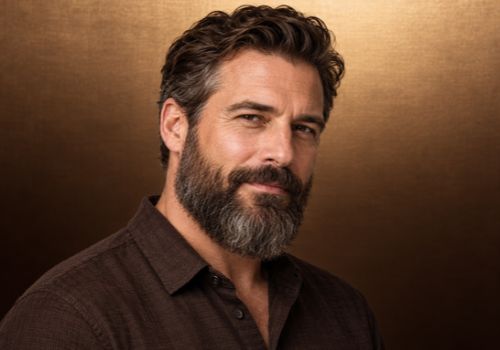
This can go either way. You either belong to the type of guys who quite like a bit of silver at the temples because it makes them look more distinguished and mature. And, of course, there’s always the hope that you’re heading towards that George Clooney look.
Or, you’re starting to worry that your prime is slowly coming to an end and it’s all downhill from here. You may not feel any older, but suddenly the bloke staring back at you in the mirror has acquired a very obvious sign that time is moving on.
And then come the questions.
Why am I going gray already? Is it genetic? Does stress really cause gray hair? Do dark-haired men go gray sooner? And if you’ve discovered your first gray hair somewhere considerably further south — yes, that hair goes gray too.
But perhaps the biggest question is: can you actually do anything about it?
Why Does Hair Turn Gray?
Hair gets its color from melanin, which is made by special cells inside each hair follicle. It’s the same natural pigment that helps give your skin its color.
As you get older, the pigment-making system inside your hair follicles also ages. It becomes less effective and can gradually decline. So when a new hair grows, it may contain less color than it used to.
Think of it a bit like an ink cartridge that’s slowly running out of ink. The printer still works, but the color starts to fade until there’s none left.
At What Age Do Men Start Going Gray?
There isn’t a particular age when men suddenly start going gray. For some, it happens in their 20s, while others still make it well into their 40s without a single gray hair.
The biggest factor is genetics. If your parents went gray early, there’s a good chance you might too — although it’s not quite as simple as that. There are many genes involved in determining when — or if — you turn into a silver fox. Although, let’s face it, some guys have been excused from the gray-hair lottery altogether because they’ve already lost all or most of their locks.
Your ethnic background also plays a role. If going gray were a race, White men would generally reach the silver-fox finish line first, followed by Asian men, with Black men taking their sweet time at the back. (Or perhaps Black men are actually winning by keeping their youthful look for longer?) But these are broad averages, not a timetable for when it’s your turn.
And what about the rumor that everyone should be 50% gray by the age of 50? Just forget it.
A large study of over 4,000 people from different countries found that only around 6–23% had at least half of their hair gray by age 50, depending on the population studied.
So if you’ve found gray hairs earlier than expected, it doesn’t necessarily mean you’re aging faster or that something is off.
Your genes simply have a much bigger say in the matter than your birthday does.
Do Dark-Haired Men go Gray Earlier?
Not necessarily — sometimes it’s simply an optical illusion.
A white hair sitting among black or dark-brown hairs stands out like a sore thumb, but if the hair is lighter, the contrast isn’t quite that obvious.
In other words, the blond bloke next to you may not have escaped the gray-hair lottery. His are just better at hiding.
Is All Your Hair the Same?
You might assume that hair is hair, regardless of where it sprouts. But the hair on your head, face and body isn’t quite the same.
For one thing, it doesn’t necessarily go gray at the same time.
Your beard and moustache can go gray, as can the hair on your chest, arms, legs and — since somebody was bound to ask — yes, your pubes eventually get in on the act too.
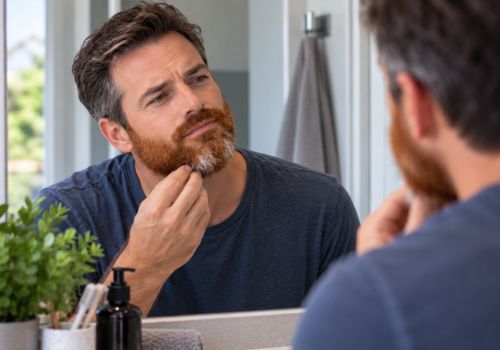
One area might start losing pigment while another carries on as if nothing is happening. That’s why you could find gray hairs creeping into your beard while the hair on your head is still hanging onto its original color, or vice versa.
And here’s another clue that your hair follicles aren’t all playing by the same rules: your hair may not even be the same color to begin with.
You could have a dark-brown mop but a reddish or even ginger beard — and the same goes for your pubes. In a medium-length or long beard, that mix can become especially noticeable: brown, reddish, and silver strands can all sit alongside each other. Keeping the beard shaped and groomed lets that natural variation become part of its character.
Hair color comes largely from different amounts and mixtures of two pigments: eumelanin, which produces darker brown and black shades, and pheomelanin, which contributes red and yellow tones. Different follicles can produce different mixtures.
It’s a bit like having several independent paint shops operating across your body rather than one central factory. Add your genetics to the mix and you can end up with a brown-haired bloke sporting a vibrant ginger beard.
Nobody told your follicles they were supposed to coordinate their outfits.
Can Stress Really Turn Your Hair Gray?

Gray hair takes the blame for a lot of things: kids, the job, partners, or even your favorite sports team.
“It’s giving me gray hair.”
But surprisingly, there may actually be a grain of truth in it.
Stress isn’t going to turn your whole head gray overnight — but there is evidence that psychological stress may influence the graying process.
One particularly interesting study tracked pigment changes along individual hairs and compared them with periods of stress in people’s lives. In some hairs, loss of pigment appeared to coincide with periods of greater stress.
Even more surprisingly, some hairs regained their color when stress levels dropped.
But before you cancel work, send the kids to Grandma and book yourself a vacation in the Maldives, there’s a catch: it doesn’t mean reducing stress is a proven way to reverse gray hair.
So yes, stress may contribute to when some hairs lose their color. But blaming your entire silver mop on your boss is probably pushing it.
What Else Can Make You Go Gray Early?
Genetics usually gets most of the blame, but it’s not the only thing associated with premature graying. A few other factors may give those silver hairs a helping hand.
| Factor | What we know |
|---|---|
| Vitamin B12 deficiency | Has been linked with premature graying and is one of the better-known nutritional associations. |
| Iron, copper & vitamin D | Low levels have also been reported in people with premature gray hair, although the evidence isn’t equally strong for all of them. |
| Smoking | Smokers appear more likely to develop premature gray hair than non-smokers. |
| Thyroid problems | Some thyroid disorders can affect hair pigmentation and have been associated with premature graying. |
| Autoimmune conditions | Certain autoimmune conditions can interfere with the cells responsible for hair pigment. |
None of this means finding a few gray hairs is a reason to be alarmed.
Does Testosterone Make Your Hair Turn Gray?
Testosterone gets blamed for plenty of things that happen to men’s hair as they get older, but going gray isn’t one of them.
There isn’t good evidence that having higher or lower testosterone levels directly causes your hair to lose its pigment.
Where testosterone does enter the hair conversation is balding. Some testosterone is converted into dihydrotestosterone (DHT), and in men who are genetically susceptible, DHT can gradually shrink certain scalp hair follicles. That’s the process behind male-pattern hair loss.
But losing your hair and losing your hair color are two different processes.
So your receding hairline and increasingly silver temples may have decided to arrive at roughly the same time, but that doesn’t mean one caused the other.
Can You Actually Stop Your Hair From Turning Gray?
Sorry, but unfortunately, there’s currently no proven treatment that can reliably stop it or permanently restore your original hair color.
But that hasn’t stopped an entire industry from trying to convince you otherwise.
You’ll find anti-gray shampoos, serums, supplements, and tablets promising to “reactivate” pigment, boost melanin, or somehow persuade your follicles to start producing pigment again. But there’s no convincing evidence that these products can actually reverse ordinary age-related graying.
Do Vitamins and Supplements Help?
If you have a genuine deficiency that’s contributing to premature graying, treating that deficiency makes sense and may help in some circumstances.
But that’s very different from taking extra vitamin B12, copper, iron, zinc or biotin when you’re not deficient.
More vitamins don’t automatically mean more melanin, and taking some nutrients — particularly iron and copper — unnecessarily can cause problems.
Can Gray Hair Ever Turn Dark Again?
Surprisingly, occasionally it can.
Researchers have documented individual gray hairs regaining pigment, and repigmentation has also been reported in connection with certain medical treatments and changes in health.
But don’t start celebrating just yet.
A few hairs deciding to make a comeback isn’t the same as discovering a way to reverse an entire head of age-related gray hair. At the moment, spontaneous or treatment-associated repigmentation is more scientifically interesting than practically useful.
So if someone is selling you a bottle that promises to turn your silver hair permanently dark again, your wallet is probably more likely to get lighter than your hair is to get darker.
What If You Just Want to Cover the Gray?
Of course, you don’t have to wait for science to figure out how to reverse gray hair. There is a much easier way.
There are color washes and gray-blending products designed specifically for men that can be used at home. Rather than covering every gray hair with one solid color, some gradually deposit color or blend the gray into your natural shade, which can give a more subtle result.
If you’re coloring at home, follow the instructions and don’t skip the recommended allergy test — even if you’ve used hair dye before. Oh, and use some old towels, or you may be asking for trouble with your partner.
And one important warning: don’t use ordinary home hair dye on your pubes! These products aren’t designed for the sensitive skin around your crown jewels, and putting hair dye where it really shouldn’t be can cause some pretty unpleasant irritation or even a chemical burn. That’s one DIY grooming experiment that could end with a rather awkward trip to the doctor.
The idea isn’t necessarily to make you look as though you’ve suddenly regained the hair color you had at 25 — it’s to turn the silver dial down a bit.
And another tip if you’re doing it yourself: don’t automatically reach for the darkest brown on the shelf just because that used to be your natural color. Going too dark or covering every gray hair uniformly can make your hair look obviously dyed.
Seek Expert Advice
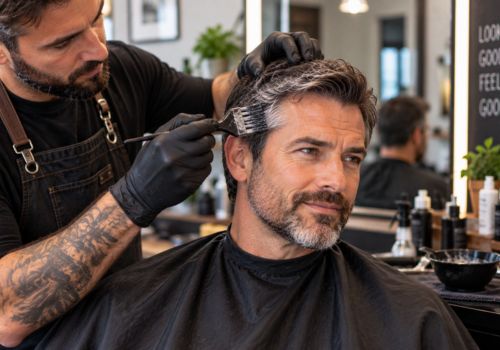
If you don’t want to get your hands dirty yourself, let your barber deal with it. Many barbers now offer gray blending, where the color can be matched closely to your natural tone and some gray is deliberately left showing.
And don’t forget the beard. Whether you wear stubble, a short beard, a medium-length beard, or a long beard, keeping it trimmed and shaped can help those silver hairs look distinguished. If you’re considering coloring it, ask your barber about a subtle blend that works with the hair on your head.
Does Gray Hair Make You Look Old — or Distinguished?
Finding your first gray hair can feel like Mother Nature has just sent you a polite little reminder that you’re not 25 anymore.
But does gray hair automatically make you look old?
Not necessarily.
Gray hair is an obvious visual cue of aging, so it can make people assume you’re older than they might if your hair were still its original color. But looking older isn’t necessarily the same thing as looking less attractive.
There’s a reason the term silver fox exists.
On a man, gray hair can also be associated with maturity, experience and confidence — and plenty of men (and women) actually find that a bit of silver at the temples looks better on a man than the hair color they started with.
And there’s another factor that probably matters more than the number of gray hairs you’ve accumulated: what you do with them.
A good haircut, a well-kept beard and gray hair that looks intentional can give a very different impression from hair that’s simply been left to do whatever it fancies.
So perhaps the question isn’t really:
“Does gray hair make me look old?”
It’s:
“Does my gray hair suit me?”
And unfortunately, science can’t answer that one for you. The bloke in the mirror gets the deciding vote.
The Lillepin Takeaway
Going gray is mostly part of getting older, and your genes have a pretty big say in when those first silver hairs decide to make an appearance.
Stress, smoking, nutritional deficiencies, and certain health conditions can play a role, particularly when graying happens unusually early. But for most men, there isn’t a vitamin, shampoo, or miracle treatment that’s going to permanently refill that pigment ink cartridge.
And as for whether gray hair makes you look old or distinguished? That’s probably less about the color and more about the bloke wearing it.
If you like the silver, keep it. If you don’t, blend it or color it.
Either way, finding a gray hair doesn’t mean your prime is over. It just means one of your follicles has finally admitted how old you are.