
Beard Grooming 101: The Complete Guide to Stubble and Short Beards

A short beard or heavy stubble can make a strong impression—but there’s a difference between rugged and “forgot where I left the razor.” A little attention in the right places keeps things looking intentional.
With a short beard, small details do the heavy lifting: an even trim, a clean neckline, and skin that doesn’t itch halfway through a date. Whether you’re keeping it boardroom-ready or hoping someone gets a little closer, we cover the tools, trimming techniques, and daily care that keep your beard sharp and comfortable. And if you decide to grow it longer, check out our guides to medium-length and long beards.
Beard-Care Basics: What Every Beard Needs
Whatever length you wear, a good beard-care routine starts with clean hair, comfortable skin, and gentle grooming. Get these basics right before adding styling products.
Clean Your Beard—and the Skin Underneath
Work a gentle cleanser through your beard with your fingertips, reaching the skin beneath it. Rinse thoroughly with lukewarm water so the cleanser doesn’t remain trapped in the hair.
Proper beard care starts with the skin underneath. According to the American Academy of Dermatology, daily cleansing with the right face wash is non-negotiable. Got sensitive or dry skin? Opt for a gentle, fragrance-free option. Best of all, if your face wash leaves your skin and beard feeling right, you can skip buying a separate beard shampoo altogether.
Moisturize Where It Matters
Don’t just slap moisturizer on the surface of your beard and call it a day. Work it straight through the hair down to the skin underneath—ideally right after washing while your face is still damp to lock in hydration.
Pick your product based on your skin type: a clean, fragrance-free moisturizer keeps sensitive skin in check, while a quality beard oil or conditioner handles coarser hair. Start light. You can always add a few extra drops, but your beard should look clean and styled, not weighed down and greasy.
Dry and Detangle Gently
After washing, pat your beard dry with a clean towel—never rub it raw. For longer beards, gently work out tangles using a quality comb instead of pulling through knots. Rough drying ruins a good beard. If you use a hairdryer, keep the heat low and keep the dryer moving so you don’t fry your hair or scorch your skin.
Keep Your Tools Clean
Maintain your arsenal. Dirty tools ruin clean cuts. Clear trapped hair out of your trimmer after every session, clean or wash the attachments according to the manufacturer’s instructions, and ensure they’re bone-dry before storing them. Do the same for your combs, brushes, and scissors. Clean tools mean sharper lines and minimal skin breakouts.
Match Your Routine to Your Beard
Stop buying every beard product on the shelf. Stick to the fundamentals: a decent cleanser, the right moisturizer, and basic grooming tools matched to your beard length. Introduce styling waxes or balms only if you need to fix a specific issue like unruly hair or lack of hold.
Stubble and Short Beards: Keep Them Comfortable and Neat
Stubble and short beards don’t need fancy styling, but small details make or break the look. Regular maintenance makes a difference, and the secret lies in the details: keep the length uniform, lock in razor-sharp neck and cheek lines, and keep the skin underneath healthy.
The Short-Beard Maintenance Schedule
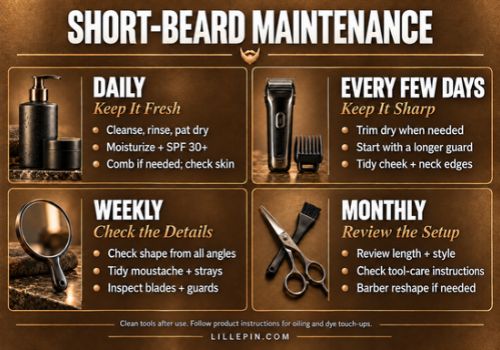
Daily Protocol: Cleansing, Hydration, and Field Inspection
- Cleanse: Wash face and beard with a gentle cleanser, driving past guard hairs to clean the skin underneath. Rinse thoroughly and pat dry—never scrub.
- Hydrate & Shield: Apply a non-comedogenic moisturizer. On skin visible through stubble, deploy an SPF 30+ shield against UV damage.
- Comb: Run a fine-toothed comb through your short beard to train hair direction. Skip this for micro-stubble.
- Inspect: Scan for skin irritation, ingrowns, or strays breaching the upper lip line. Inspection means monitoring, not daily cutting.
Every 2–4 Days: Length Control & Boundary Maintenance
Adjust maintenance frequency to your actual growth rate rather than a rigid calendar. Heavy stubble demands attention every few days; a full short beard can stretch longer.
- Trim Dry: Always trim dry hair. Start with a longer guard than you think you need, stepping down incrementally to lock in your exact length.
- Clean Edges: Sharpen cheek and necklines carefully. Avoid repeatedly running blades over raw or irritated skin.
Weekly Protocol: Structural Review & Gear Maintenance
Set aside 10 minutes once per week for geometric alignment and tool care:
- 360° Inspection: Examine front, profile, and under-jaw angles before making a single cut.
- Clear the Lip Line: Precision-trim stray hairs extending over the upper lip.
- Target Stray Hairs: Snip outlier hairs with shears instead of hacking away bulk from the main body.
- Sanitize Gear: Brush away hair debris, sanitize attachments, and check blades for dullness or pull.
Monthly Protocol: Style Audit & Tool Maintenance
- Assess Framework: Evaluate if your current length and outline still suit your face shape. Book a barber session if you need to reset baseline geometry or re-establish crisp borders.
- Equipment Service: Lubricate trimmer blades per manufacturer guidelines and replace worn heads.
- Precision Touch-Ups: Follow the product’s touch-up instructions, rather than blindly re-dyeing the entire beard.
Rule of Engagement: Start skin-first hydration and cleansing on day one of growth. Introduce trimming mechanics only when hair reaches your target length.
Essential Gear You Need
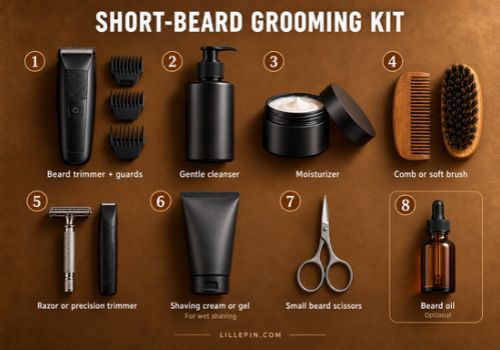
Keep your kit simple:
| Tool or Product | What It’s For |
|---|---|
| Beard trimmer with adjustable guards | Maintains your preferred length with controlled, even trimming. |
| Gentle cleanser and suitable moisturizer | Daily cleansing and care for the skin beneath your beard. |
| Small comb or soft brush | Arranges the hairs if your beard is long enough. Ultra-short stubble can skip this. |
| Razor or precision trimmer | Tidies unwanted hair outside your cheek and neckline borders, depending on your preferred finish. |
| Shaving cream or gel — if wet shaving | Helps the razor glide when cleaning up the neckline and cheeks. Choose a sensitive-skin formula if needed. |
| Small grooming scissors | Invest in dedicated facial-hair scissors—kitchen shears or your partner’s nail scissors are a rookie move. Use them for precise touch-ups on rogue strays and upper-lip invaders. Trim one stray hair at a time; you’re sculpting a jawline, not mowing the lawn. |
Beard oil is optional. If your moisturizer keeps your skin comfortable and your short beard soft, there is no need to add another product.
Building the rest of your bathroom toolkit? Our guide to men’s grooming essentials covers what deserves a place on the shelf.
Maintain an Even Length
Trim your beard when it’s dry so you can judge its natural length and shape. Start with a longer guard than you think you need—you can shorten it gradually.
Use light, controlled passes instead of jamming the blades into your skin. Check your front and profile angles constantly—never butcher the entire beard just to match one uneven patch.
Define the Neckline and Cheek Lines
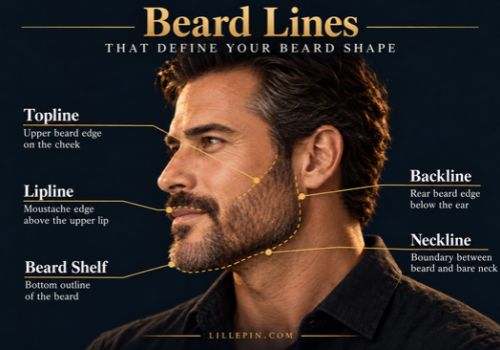
Before trimming the edges, look straight ahead with your head in a natural position. Decide which hairs belong to the beard and which sit outside its shape.
Neckline: Trace a soft curve beneath the jawline. Never carve it too high.
Top or Cheek Lines: Clean up stray hairs above your natural growth line first, rather than cutting low, aggressive slashes. (Pro tip: Have a barber establish your initial lines if you want an easy blueprint to follow.)
Shaving Protocol: Soften the areas with warm water, apply shaving cream or gel, and shave gently with the grain to reduce irritation and ingrown hairs. If close shaving irritates your skin, use a precision trimmer instead. Clean borders are optional; comfortable skin isn’t.
Keep the Moustache Tidy
Comb the moustache into place, then carefully trim any hairs that extend over the upper lip. Carefully take off small amounts and check both sides before continuing.
Coloring Stubble and Short Beards: Is It Worth It?
A little silver can look sharp. If you’d rather blend it, coloring is an option—but very short stubble gives you less hair to work with and more exposed skin around it. Aim for a natural finish, not a beard that looks painted on.
For a short beard: Coloring may help blend contrasting hairs or create a more uniform appearance. It won’t create hair where your beard doesn’t grow.
For very short stubble: Consider the upkeep. Regular trimming removes colored hair, and new growth can change the result quickly. Check that the product is intended for your facial-hair length; if you trim every few days, keeping the silver may be the simpler choice.
Before You Reach for the Dye
- Choose a product labelled for facial hair and follow its application instructions.
- Do the allergy test before every use, allowing the full stated waiting period—commonly 48 hours.
- Avoid irritated, sunburned or broken skin, including fresh shaving cuts.
- Stick to the processing time. Leaving it longer isn’t a shortcut to a better result.
- Ask a barber about shade selection if you want subtle blending rather than full coverage.
Dyes can cause allergic reactions even after previous trouble-free use. A negative skin test doesn’t guarantee you won’t react. If you’ve reacted before, seek professional advice before trying another dye.
Consider a Barber to Color Very Short Stubble
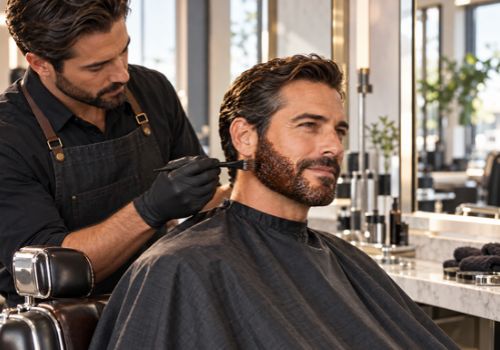
With very short stubble, precise application matters. Dyeing short stubble or a tight beard carries a higher risk of skin staining. When hair length is under a few millimeters, dye easily contacts the epidermis, leaving a painted-on finish rather than natural-looking facial hair.
A barber experienced in beard coloring can help choose the shade and apply it carefully—particularly for your first attempt. You want someone admiring your jawline, not wondering where you bought the stencil.
Stubble Dyeing Execution Rules:
- Select the Right Shade: Use the product’s shade guide or ask a barber about a natural-looking match. Facial hair absorbs dye quickly, and lighter shades prevent an overly dark, opaque finish.
- Barber First Pass: For your initial color treatment, utilize a professional barber experienced in beard coloring to map natural boundaries and avoid stencil-like lines along the jaw.
- Protect Surrounding Skin: Apply a thin layer of petroleum jelly along your cheek and necklines before application to act as a barrier against skin staining.
- Strict Safety First: Professional application does not bypass safety requirements. Always execute a 48-hour skin patch test behind the ear or on the inner elbow before every application to screen for severe allergic reactions (contact dermatitis).
Protocol Rule: If dye touches bare skin during application, follow the product’s instructions for removing dye from surrounding skin. Strained skin undermines sharp grooming faster than grey hair ever will.
Stubble Defense: Irritation Control & Barrier Protection
Short stubble requires targeted skin maintenance to keep your jawline sharp, comfortable, and touchable—without feeling like a wire brush or a 50-grit cheese grater.
Stubble Care Protocol:
- Precision Shaving: Soften facial hair with warm water before tidying cheeks or necklines. Apply a slick shaving cream, pass the blade strictly with the grain, and never pull skin taut or squeeze trapped hairs.
- Sun Protection: Shield exposed skin underneath short stubble by applying a daily non-comedogenic SPF 30+ moisturizer.
- Tactical Hydration: Freshly sheared stubble is notoriously sharp. Use aloe vera for daily skin hydration. Moisturizing helps keep skin comfortable, although freshly cut stubble may still feel prickly.
- Respect Natural Growth: Work with your natural density. Trimming everything down further to cover low-density spots only ruins your outline—carve sharp borders and let natural coverage work for you.
Flaky Skin and Irritation Under Your Beard
Flakes on your shirt aren’t the finishing touch you’re after. If the skin beneath your stubble feels dry or irritated, keep care simple: wash gently with lukewarm water, rinse thoroughly, and apply a fragrance-free moisturizer. Ease off aggressive brushing and scrubbing, and stop any product that stings or seems to trigger irritation.
Don’t assume every flake means dry skin. Persistent itching, greasy scales or a rash may indicate beard dandruff or another skin condition. If gentle care doesn’t help—or you develop painful bumps or broken skin—see a dermatologist rather than piling on more beard oil.
Common Short-Beard Mistakes
| Mistake | What to Do Instead |
|---|---|
| Starting too short | Start with a longer guard and shorten gradually. You can take more off—you can’t put it back. |
| Chasing perfect symmetry | Make small adjustments and step back to check the balance. Over-correcting both sides is how you end up clean-shaven by accident. |
| Cutting the neckline too high | Check its position with your head level before trimming. Keep the boundary beneath the jaw rather than carving into the beard’s underside. |
| Neglecting the skin | Short facial hair still needs gentle cleansing and moisturizing. Work products through to the skin underneath. |
| Using too much product | Start with a small amount, following the product’s instructions. Your beard should look groomed, not greased. |
When a Barber Can Help
Consider a barber when establishing your first beard shape, changing styles or struggling to balance the sides. Explain how much length you want to keep and how much maintenance you’re comfortable doing at home.
Before leaving, ask which lines to maintain and which areas to leave alone. A clear shape and a few practical instructions can make your next home trim much easier.