Scientists Uncover the Bone-Brain Axis and Its Hidden Role in Menopause

Menopause Research: Emerging evidence suggests that bone health and emotional well-being may be more closely connected than previously thought
Lillepin Research Reference
Study Category:
Systems Biology Review / Bone-Brain Communication
Primary Study:
Biomolecules (2026)
Research ID: P1-054
When we think about osteoporosis and depression, we tend to see them as completely separate problems.
One affects the skeleton. The other affects the mind.
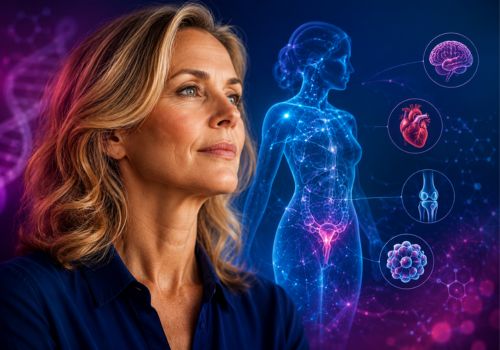
But a growing body of research is challenging that view. Scientists are beginning to explore what they call the bone-brain axis — a complex network of communication between the skeletal system and the brain that may help explain why bone loss and mood disorders often appear together, particularly as we age.
A recent review published in Biomolecules brings together evidence suggesting that bones and the brain may be communicating through hormones, inflammatory signals, immune pathways, neurotransmitters, and the nervous system itself.
For women navigating perimenopause and menopause, the findings offer a fascinating reminder that many changes happening in the body may be more interconnected than they first appear. This idea also echoes recent findings from AI Just Revealed a Hidden Truth About Menopause, which showed that menopause affects multiple organs and biological systems simultaneously.
The Role of Inflammation
One of the strongest links involves chronic low-grade inflammation.
As we age, the body often experiences a gradual increase in inflammatory activity — a process also referred to as inflammaging.
Inflammation can contribute to bone breakdown by stimulating cells that remove bone tissue. At the same time, inflammatory molecules can affect brain function, mood regulation, motivation, and emotional resilience.
This means that inflammation may represent a common biological pathway contributing to both osteoporosis and depression.
Researchers believe this shared inflammatory environment could help explain why the two conditions frequently occur together.
Hormones May Be Part of the Story
Hormones provide another important piece of the puzzle.
During menopause, declining estrogen levels can accelerate bone loss. But estrogen also plays important roles within the brain, influencing mood, cognition, stress responses, and neural communication.
As estrogen declines, changes may occur simultaneously in both skeletal health and emotional wellbeing.
This does not mean that menopause automatically causes depression or osteoporosis. However, it may help explain why women often notice changes affecting multiple body systems during the menopausal transition.
Similar interactions between hormones, bone health, and brain function may also occur in men during age-related hormonal changes such as andropause.
For a broader look at the role of reproductive hormones beyond menstruation, see Your Ovaries Don’t Just Control Periods.
Bones Are More Active Than We Once Thought

Perhaps one of the most surprising findings emerging from bone research is that the skeleton may function as a signaling organ.
Bone tissue produces molecules that travel through the bloodstream and influence other parts of the body, including the brain.
Researchers are still working to understand exactly how these signals affect mood, cognition, and mental health. However, the findings challenge the traditional idea that bones exist solely to provide structure and support.
Instead, the skeleton appears to be participating in broader physiological processes that influence overall health.
This emerging view of bone biology also helps explain why osteoporosis may have effects that extend beyond fracture risk alone.
Stress and the Nervous System
The review also highlights the role of stress-related pathways.
Chronic stress activates systems designed to help the body respond to threats. When these systems remain active for long periods, they may affect both bone remodeling and brain function.
Stress hormones, nervous-system activity, and immune responses can all influence the balance between building new bone and breaking down existing bone tissue.
At the same time, these same pathways may affect mood and emotional wellbeing.
Researchers suggest that this shared biology may be another reason why bone health and mental health are often intertwined.
Related reading:
- 10 Signs of Stress You Shouldn’t Ignore
- Unlock Your Inner Harmony: The Vagus Nerve, Menopause, and Sustainable Wellness
- 10 Natural Ways to Combat Anxiety During Menopause
What This Could Mean for Women After 40
For women in midlife and beyond, the findings reinforce an important message: health is rarely divided into neat categories.
Bone health, mood, cognition, inflammation, hormones, many common menopause symptoms, stress, and immune function are all connected through overlapping biological systems.
Rather than viewing osteoporosis as purely a bone problem or depression as purely a mental-health issue, researchers are increasingly recognizing that both may be influenced by shared underlying processes.
This broader perspective may help explain why lifestyle habits that support overall health, including physical activity, sleep, nutrition, stress management, and social connection, often benefit multiple systems at the same time.
Emerging research into the gut-brain-hormone connection suggests that communication between different body systems may be even more extensive than scientists once believed.
The Lillepin Takeaway
Scientists are beginning to uncover a fascinating biological conversation between the skeleton and the brain.
While the research is still evolving, the emerging concept of the bone-brain axis suggests that osteoporosis and depression may share common pathways involving inflammation, hormones, immune signaling, and nervous-system function.
For women navigating menopause and healthy aging, the findings offer another reminder that the body operates as an integrated system rather than a collection of separate parts.
This idea is also reflected in recent research on menopause brain fog and whole-body menopausal changes, both of which point toward a far more interconnected picture of aging than previously understood.
Sometimes the most important discoveries are not about a single organ or symptom, but about understanding how everything works together.
Related Lillepin Research
P1-035 → Read the full article: AI Just Revealed a Hidden Truth About Menopause
P1-049 → Read the full article: Scientists Finally Start to Understand Menopause Brain Fog
P2-040 → Read the full article: Your Gut Does Not Stay the Same After Menopause.
P4-015 → Read the full article: Could Your First Period and Menopause Predict How You Age?
P1-098 → Read the full article: Could One Workout a Week Be as Effective as Three?
MW-058 → Read the full article: Could HRT Lower Dementia Risk?