Could Your First Period and Menopause Predict How You Age?

Menopause Research: What Reproductive Timing May Tell Us About Biological Aging
Lillepin Research Reference
Study Category: Healthy Aging • Biological Aging • Reproductive Health
Primary Study
Title: Reproductive factors and biological aging in women: evidence from DNA methylation clocks
Journal: Nature Aging 2026
Study Type: Population-based observational study using 12 DNA methylation (epigenetic) clocks.
Supporting Study
Title: Reproductive history and exceptional longevity among women from the Women’s Health Initiative
Journal: Menopause 2017
Study Type: Prospective cohort study.
Research ID: P4-015
Could Your First Period and Menopause Predict Your Biological Aging?
Many women have wondered whether the age at which they got their first period has any connection with when menopause begins. It’s a question that has sparked curiosity for years, and more recently, scientists have started asking whether these important reproductive milestones could reveal something about health and aging later in life.
Age at first period, age at menopause, and the length of a woman’s reproductive lifespan have all been studied in relation to long-term health. Rather than focusing only on fertility or hormone changes, researchers are increasingly exploring whether reproductive timing may provide clues about the body’s broader aging processes and overall health as women grow older.
What Was the Purpose of the Study?
Scientists have long known that women’s reproductive history may be linked to long-term health, but it has remained unclear whether milestones such as age at first period, age at menopause or the length of the reproductive lifespan are associated with biological aging, rather than simply chronological age.
While previous research has explored relationships with conditions such as cardiovascular disease and longevity, the biological mechanisms behind these associations are still being investigated.
This study aimed to examine whether reproductive life events—including age at first period, age at menopause, number of pregnancies, number of live births and total reproductive lifespan—were associated with biological aging in women aged 50 years and older.
Instead of simply looking at a woman’s age in years, the researchers estimated her biological age—how old her body appears to be at a cellular level. To do this, they used DNA methylation clocks, sometimes called epigenetic clocks. These are scientific tools that measure tiny chemical markers attached to DNA.
As we grow older, these markers change in predictable ways, allowing researchers to estimate whether a person’s body is aging more slowly, at about the expected rate, or faster than expected for their chronological age.
The researchers hoped this approach would provide a better understanding of whether reproductive history may reflect broader biological aging processes and help explain why some women appear to age differently than others.
How the Study Was Conducted
The researchers analyzed data from 1,117 women aged 50 years and older. They examined each woman’s reproductive history, including:
- Age at first period (menarche)
- Age at menopause
- Length of reproductive lifespan
- Number of pregnancies
- Number of live births
The researchers also collected blood samples to measure patterns of DNA methylation—small chemical changes to DNA that can be used to estimate how the body is aging at a cellular level.
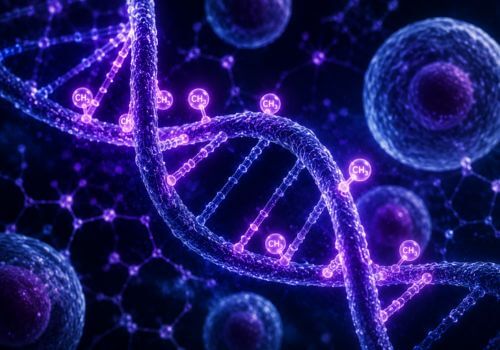
To build a more complete picture of how the body ages, the researchers analyzed these DNA methylation patterns using 12 different epigenetic clocks.
Think of these clocks as 12 different ways of measuring biological aging. Each clock was designed for a slightly different purpose, helping the researchers assess different aspects of aging. Some of the best-known include:
- Horvath clock – One of the first and most widely used biological age clocks. It estimates how old the body appears to be based on DNA methylation patterns across many different tissues.
- Hannum clock – One of the earliest blood-based epigenetic clocks, developed specifically to estimate biological age from blood samples.
- PhenoAge – Designed to estimate biological age while also reflecting a person’s overall health and risk of developing age-related diseases.
- GrimAge and GrimAge2 – Developed to better predict lifespan and the risk of age-related illnesses and death. These are considered some of the strongest predictors of healthy aging.
- DunedinPACE – Rather than estimating biological age, this clock measures the pace of aging, showing whether someone is aging faster or slower than expected.
The remaining clocks also estimate biological aging but use different mathematical models or focus on slightly different biological processes. By combining the results from all 12 clocks, the researchers were able to assess biological aging from several different perspectives rather than relying on a single measurement.
The researchers also adjusted their analyses for factors that could influence the results, including age, race and ethnicity, education, smoking, body mass index (BMI), physical activity and other health-related characteristics.
This helped them determine whether reproductive life events were independently associated with biological aging rather than simply reflecting differences in lifestyle or overall health.

What Did the Researchers Find?
The researchers found that different aspects of a woman’s reproductive history were associated with biological aging in different ways. Some reproductive factors were linked to slower biological aging, while others were associated with faster biological aging.
The results also varied depending on which epigenetic clock was used, suggesting that different clocks measure different aspects of how the body ages.
Key Findings at a Glance
| Reproductive Factor | Finding |
| Later menopause | Associated with slower biological aging on the Vidal-Bralo clock |
| Longer reproductive lifespan | Associated with slower biological aging on the Vidal-Bralo clock |
| Age at first period (menarche) | No significant association with biological aging |
| Number of pregnancies | Mixed associations depending on the epigenetic clock used |
| Number of live births | Associated with faster biological aging on several epigenetic clocks |
| Earlier age at first birth | Associated with faster biological aging on several epigenetic clocks |
| Breastfeeding history | No significant association with biological aging |
| Age at last birth | No significant association with biological aging |
Later Menopause and a Longer Reproductive Lifespan
Women who experienced menopause at an older age showed slightly slower biological aging according to one of the 12 epigenetic clocks used in the study. A longer reproductive lifespan was also associated with slower biological aging on this same clock.
These associations remained statistically significant after the researchers corrected for multiple comparisons. However, they were not consistently observed across all 12 epigenetic clocks, suggesting that the relationship between reproductive lifespan and biological aging may be more complex than a single measurement can capture.
Age at First Period
The age at which a woman had her first period (menarche) was not significantly associated with biological aging on any of the epigenetic clocks examined.
Pregnancies and Live Births
The findings for pregnancies were more complex.
Each additional pregnancy was associated with faster biological aging on two of the epigenetic clocks, but slower biological aging on another. After statistical correction, two of these associations remained significant.
Women with more live births also tended to show faster biological aging on several of the epigenetic clocks, although the findings were not completely consistent across all of the clocks.
The researchers also looked at women with larger families. Compared with women who had fewer pregnancies, those who had experienced five or more pregnancies had more than twice the odds of accelerated biological aging according to one of the epigenetic clocks.
Similarly, women with five or more live births had more than twice the odds of accelerated biological aging on another clock.
Age at First Birth
Women who had their first child at a younger age tended to show faster biological aging on several of the epigenetic clocks. The strongest associations remained statistically significant even after the researchers corrected for multiple testing.
Breastfeeding and Age at Last Birth
The researchers found no significant association between biological aging and breastfeeding history, ever having been pregnant, or age at last live birth in their main analyses.
Technical note: The epigenetic clocks used in this study included Horvath, Hannum, PhenoAge, GrimAge, GrimAge2, DunedinPoAm, Vidal-Bralo, SkinBloodAge and several others. Because each clock measures biological aging differently, the results varied between them.
Overall Findings
Overall, the study found that reproductive history may influence biological aging, but not in one simple or uniform way. Later menopause and a longer reproductive lifespan were linked to slower biological aging on one epigenetic clock, while more pregnancies, more live births, and an earlier age at first birth were associated with faster biological aging on several others.
The researchers concluded that biological aging is a “mosaic” process, with different epigenetic clocks capturing different aspects of how the body ages.
How Does This Compare With Earlier Research?
The findings from this study build on earlier research suggesting that the timing of reproductive events may influence healthy aging.
One of the largest earlier investigations came from the Women’s Health Initiative, which followed 16,251 postmenopausal women to examine whether age at first period, age at menopause, and the length of a woman’s reproductive lifespan were associated with exceptional longevity—defined as living to age 90 or beyond.
The researchers found that women who experienced menopause at a later age and those with a longer reproductive lifespan were more likely to survive to age 90. Women whose first period began at age 12 or later also had a modest increase in the likelihood of exceptional longevity, although this association weakened after accounting for overall health.
While the Women’s Health Initiative focused on how long women lived, the newer Nature study examined how quickly women appeared to be aging biologically using DNA methylation and epigenetic clocks. Rather than measuring lifespan, it estimated biological age, providing a different way of exploring the relationship between reproductive history and healthy aging.
Although the two studies measured different outcomes, they reached similar conclusions in one important area. Both found that later menopause and a longer reproductive lifespan were associated with healthier aging, supporting the idea that reproductive timing may influence how women age. However, the newer study also showed that these relationships are more nuanced than previously thought, with different measures of biological aging producing different results.
Limitations
Like all research, both studies have some limitations.
Original Nature Study
Although this study included over 1,100 women and used sophisticated measures of biological aging, it was observational. This means the researchers could identify associations between reproductive history and biological aging, but they could not prove that one caused the other.
The study also relied on participants’ self-reported reproductive histories, including the ages at which they experienced their first period and menopause. While these are important life events that many women remember well, some inaccuracies are possible.
Finally, although the researchers adjusted for many factors that can influence biological aging, other unmeasured lifestyle, environmental, or genetic factors may also have contributed to the findings.
Earlier Research
The Women’s Health Initiative followed a much larger group of women over many years, making it one of the strongest studies of longevity in postmenopausal women. However, like the newer study, it was observational and could not establish cause and effect.
It also relied on self-reported reproductive history and focused on women in the United States, meaning the findings may not apply equally to women from other populations.
In addition, the study examined longevity rather than biological aging, so its findings cannot be directly compared with measurements obtained using modern epigenetic clocks.
Lillepin Takeaway

This research adds another piece to the mosaic of how women’s reproductive history may influence healthy aging.
The study suggests that factors such as the age at menopause, the length of a woman’s reproductive lifespan, the number of pregnancies, and the age at first birth may all be associated with biological aging. However, these relationships were not consistent across all of the measures used, highlighting that aging is a complex process influenced by many biological, genetic, lifestyle, and environmental factors.
Importantly, these findings do not mean that women who experienced menopause earlier, had larger families, or had children at a younger age are destined to age more quickly. The study identified statistical associations, not cause-and-effect relationships, and many aspects of healthy aging remain within our control.
Regular physical activity, a balanced diet, quality sleep, stress management, avoiding smoking, and staying socially connected are all supported by strong evidence as ways to promote healthy aging throughout midlife and beyond.
As research continues, studies like this are helping scientists better understand the many factors that influence how we age. While reproductive history is one part of that picture, it is only one of many factors that contribute to healthy aging and longevity.
We need to remember that every woman’s reproductive journey is unique. While reproductive history may influence biological aging, healthy lifestyle choices remain among the most powerful factors supporting health and longevity throughout midlife and beyond.
Related Lillepin Research
P1-049 — Scientists Finally Start to Understand Menopause Brain Fog
A 2026 Lancet review explores how menopause may influence memory, attention, focus, and mental clarity during midlife.
→ Read the full article Scientists Finally Start to Understand Menopause Brain Fog
P2-044 — Could Your Gut Influence Estrogen? New Research Suggests It Might
A 2026 PNAS study suggests the gut microbiome may play a larger role in estrogen recycling and hormone regulation than previously understood.
→ Read the full article: Could Your Gut Influence Estrogen? New Research Suggests It Might
P2-040 — Your Gut Does Not Stay the Same After Menopause
New research shows that menopause changes the gut microbiome, reducing bacterial diversity and altering microbes involved in estrogen metabolism, inflammation, and metabolic health. Scientists believe these changes may contribute to many common menopause symptoms and could play an important role in healthy aging. → Read the full article: Your Gut Does Not Stay the Same After Menopause.
P1-054 — Scientists Discover a Surprising Connection Between Your Bones and Your Brain
A 2026 Biomolecules review explores the emerging bone-brain axis, suggesting that bone health and brain function may be connected through hormones, inflammation, immune signaling, neurotransmitters, and stress-related pathways.
→ Read the full article Scientists Discover a Surprising Connection Between Your Bones and Your Brain
P1-077 — Why Perimenopause Could Be One of the Most Important Times to Protect Your Heart
A 2026 Journal of the American Heart Association study suggests that perimenopause may be a critical window for identifying changes in cardiovascular health, with differences in cholesterol, blood sugar, and overall heart health appearing before menopause is complete.
→ Read the full article: Why Perimenopause Could Be One of the Most Important Times to Protect Your Heart
P1-098 — Could One Workout a Week Be as Effective as Three? A 2026 randomized controlled trial found that one longer weekly HIIT session produced similar improvements in body composition, waist circumference, and cardiorespiratory fitness as three shorter weekly sessions when the total amount of exercise was the same. → Read the full article: Could One Workout a Week Be as Effective as Three?