AI Just Revealed a Hidden Truth About Menopause
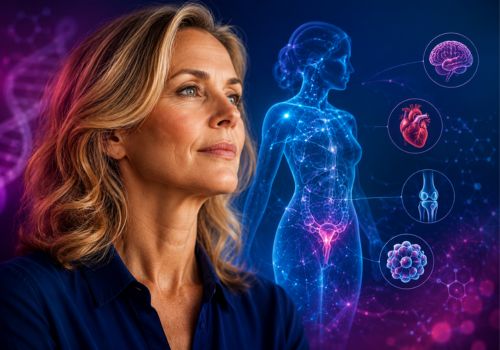
Menopause Research: Scientists now believe menopause may involve a whole-body biological transition — not just hormonal change.
Lillepin Research Reference
Study Category: Systems Biology & Healthy Aging
Primary Study: Nature Aging (2026)
Research ID: P1-035
Menopause and healthy aging are more closely connected than we once realized. For decades, mainstream medicine has viewed menopause through a tiny keyhole: ovaries shut down, estrogen drops, and reproduction ends. But that’s only a fraction of the story.
But a groundbreaking 2026 study published in Nature Aging by researchers at the Barcelona Supercomputing Center suggests the reality may be far more complex.
Using advanced artificial intelligence and supercomputing analysis, scientists examined more than a thousand tissue samples from women between the ages of 20 and 70 to create one of the first detailed molecular aging maps of the female reproductive system.
Their discovery challenges the traditional idea of menopause as a simple hormonal decline. Instead, the findings suggest menopause may represent a large-scale biological transition involving multiple interconnected tissues and systems throughout the body. This research supports a major shift in how we think about menopause and healthy aging.
Menopause and Healthy Aging: Not All Organs Age at the Same Speed
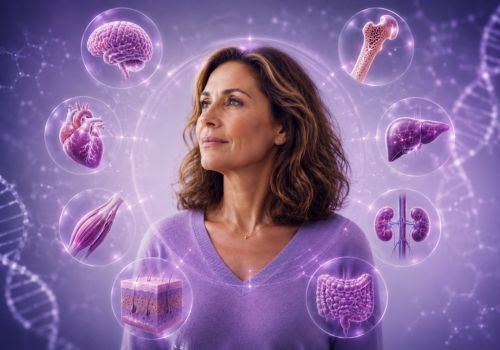
One of the study’s most fascinating discoveries was that different reproductive tissues appear to age along very different timelines.
Researchers observed that:
- the ovaries and vaginal tissues showed signs of gradual molecular aging years before menopause,
- while the uterus appeared to undergo more abrupt biological changes closer to the menopausal transition itself.
Rather than acting as a single isolated event, menopause may involve widespread biological remodeling across reproductive tissues including the uterus, cervix, fallopian tubes, breasts, and surrounding systems.
This may also help explain why many women start to feel “different” long before their periods officially stop.
Symptoms, such as fatigue, anxiety, disrupted sleep, weight changes, heightened stress sensitivity, brain fog, or emotional overwhelm, may begin emerging during this earlier hormonal transition phase — even while menstrual cycles still appear relatively normal.
This growing understanding may help explain why perimenopause symptoms are often overlooked, misunderstood, or dismissed for years before menopause officially begins.
A Systems Biology View of Menopause
Researchers increasingly describe this interconnected perspective as systems biology — the idea that menopause affects multiple communicating systems throughout the body rather than isolated organs alone.
Scientists are beginning to apply similar systems-based approaches to other age-related hormonal transitions, including andropause in men, although the research is currently much less developed.
Instead of viewing menopause purely through hormones or reproduction, this emerging framework recognizes that:
- inflammation,
- metabolism,
- immune signaling,
- cardiovascular health,
- nervous-system regulation,
- brain function,
- tissue aging,
- and the gut microbiome
may all interact during the menopausal transition.
This may help explain why menopause symptoms can feel so widespread and unpredictable from woman to woman.
The Bigger Picture: Why These Changes Matter
The researchers believe these tissue-level shifts may influence broader systems connected to inflammation, metabolism, cardiovascular health, nervous-system regulation, and the wider relationship between menopause and healthy aging.
That matters because menopause symptoms rarely happen in isolation.
1. The Inflammaging Connection
Scientists increasingly believe menopause may accelerate aspects of inflammaging — the chronic low-grade inflammation associated with biological aging.
When tissues undergo rapid biological adaptation, inflammatory signaling pathways may become more active. Over time, this could potentially contribute to:
- joint discomfort,
- tissue breakdown,
- fatigue,
- immune dysregulation,
- and accelerated biological aging.
This supports the growing understanding that menopause and healthy aging are not simply a reproductive transition, but a systemic inflammatory and metabolic shift.
2. The Metabolic Shift
The study also reinforces how deeply reproductive biology is connected to metabolism and cardiovascular health.
Researchers noted that menopause-related tissue remodeling may be associated with increased cardiometabolic vulnerability, including changes involving:
- insulin sensitivity,
- fat distribution,
- energy regulation,
- and cardiovascular function.
In other words, menopause may influence far more than menstrual cycles; it may alter how the body manages energy, inflammation, and long-term metabolic resilience.
This may help explain why so many women experience:
- stubborn weight gain,
- changes in body composition,
- blood sugar instability,
- fatigue,
- or rising cholesterol during midlife.
Foods rich in soluble fiber, such as oats, may help support healthy cholesterol levels, blood sugar balance, and overall metabolic health during this transition. This strongly connects with the growing conversation around midlife metabolism.
3. The Nervous System Response
Emerging research increasingly suggests the nervous system plays a major role in how menopause symptoms are experienced.
As tissues, hormones, immune signaling, and metabolic pathways shift during menopause, the autonomic nervous system may become more reactive or stress-sensitive in some women.
Researchers suspect this interconnected biological stress response may help explain why menopause is frequently associated with:
- sleep disruption,
- anxiety,
- temperature dysregulation,
- emotional overwhelm,
- brain fog,
- and heightened stress sensitivity.
This aligns with the growing understanding that menopause symptoms often involve nervous-system regulation and whole-body communication pathways — not hormones alone.
4. The Skin and Tissue Connection
Because estrogen helps support collagen production, circulation, tissue repair, and skin structure, menopause-related tissue remodeling may also influence visible aging processes throughout the body.
Researchers increasingly believe these systemic biological shifts may contribute to:
- skin thinning,
- dryness,
- itchy skin
- collagen loss,
- slower tissue repair,
- connective tissue changes,
- and reduced skin elasticity during midlife.
These same tissue changes may also help explain why many women notice more visible veins, prominent tendons, dry heels, and other signs of aging feet after 40 during menopause. Such visible changes may reflect deeper biological remodeling occurring internally during the menopausal transition.
This is one reason menopause increasingly appears less like an isolated hormonal event and more like a full-body aging recalibration.
This connects closely with topics such as collagen loss, skin glow after menopause, and anti-aging skincare.
Could Menopause One Day Be Mapped With a Blood Test?
Another exciting aspect of the study was the identification of molecular aging biomarkers found in blood plasma samples from more than 21,000 women.
Researchers hope these findings could eventually contribute to more personalized ways of tracking biological aging and menopause-related changes in the future.
While this research is still early, it raises the possibility that medicine may eventually move toward more individualized menopause care based on biological patterns rather than symptom guesswork alone.
The Lillepin Takeaway
This research supports a major shift in how we think about menopause and healthy aging.
Your body is not simply “declining.”
It may be adapting, reorganizing, and recalibrating across multiple interconnected systems all at once.
Menopause appears increasingly less like a single hormonal event — and more like a whole-body biological transition involving:
- metabolism,
- inflammation,
- nervous-system signaling,
- immune pathways,
- cardiovascular health,
- tissue aging,
- and brain function simultaneously.
Understanding this bigger picture may help women move away from self-blame and toward more supportive approaches focused on:
- metabolic health,
- nervous-system regulation,
- inflammation reduction,
- movement,
- sleep,
- emotional resilience,
- and long-term healthy aging.
Menopause is not the end of vitality.
It may be one of the most profound biological transitions a woman will ever experience — a full-body recalibration that deserves deeper understanding, better support, and far more respect than it has historically received.
Related Lillepin Research
P1-049 → Read the full article Scientists Finally Start to Understand Menopause Brain Fog
P1-077 → Read the full article: Why Perimenopause Could Be One of the Most Important Times to Protect Your Heart
P2-044 → Read the full article: Could Your Gut Influence Estrogen? New Research Suggests It Might
P1-054 → Read the full article: Scientists Discover a Surprising Connection Between Your Bones and Your Brain
P2-040 → Read the full article: Your Gut Does Not Stay the Same After Menopause.
P4-015 → Read the full article: Could Your First Period and Menopause Predict How You Age?
P1-006 → Read the full article: Could Loneliness Affect Memory and Thinking During Perimenopause?
Is menopause more than just a hormonal change?
Emerging research suggests menopause may involve a whole-body biological transition rather than hormones alone. Scientists increasingly believe menopause can affect interconnected systems, including metabolism, inflammation, brain function, cardiovascular health, skin aging, immune signaling, and nervous-system regulation simultaneously.
Can menopause affect the nervous system?
Yes. Emerging evidence suggests hormonal, metabolic, and inflammatory shifts during menopause may increase stress sensitivity within the autonomic nervous system. This may contribute to symptoms such as anxiety, emotional overwhelm, sleep problems, temperature dysregulation, and heightened stress responses.
Why do some women feel different long before menopause officially begins?
The study suggests some reproductive tissues may begin molecular aging changes years before menopause itself. This may help explain why many women experience symptoms during perimenopause even while menstrual cycles still appear relatively normal.
Can menopause affect metabolism and weight regulation?
Researchers increasingly believe menopause-related biological changes may influence insulin sensitivity, fat distribution, energy regulation, inflammation, and cardiovascular health. This may contribute to symptoms such as stubborn weight gain, fatigue, blood sugar instability, and changing body composition during midlife.
Could future blood tests help track menopause-related aging changes?
Researchers identified molecular aging biomarkers in blood plasma samples, raising the possibility that future medicine may eventually use personalized biological markers to better understand menopause-related changes and healthy aging patterns. However, this research is still in its early stages.
What is “systems biology” in menopause research?
Systems biology is the idea that menopause affects multiple communicating systems throughout the body rather than isolated organs alone. Instead of focusing only on estrogen decline, this approach examines how hormones, metabolism, inflammation, brain function, immune signaling, and the nervous system interact together during menopause.