Nobody Warned Me My Feet Would Age Like This
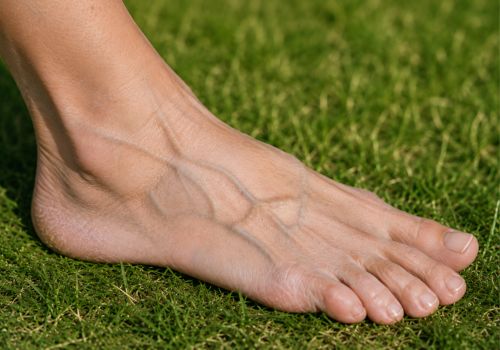
Most women don’t notice foot changes after 40 until they’re slipping into their favorite sandals, and something catches their eye.
The veins on the top of your feet seem more noticeable. Your skin looks a little thinner. Tendons that never used to catch your eye suddenly stand out. Your heels and the outer edges of your aging feet may seem drier than they used to, no matter how much moisturizer you apply.
It’s easy to blame neglected foot care or simply getting older.
But many of these changes are actually part of the normal aging process that affects the skin, connective tissues, circulation, and even the natural cushioning inside your feet.
The surprising thing is that our feet often show these changes earlier than many other parts of the body. While we tend to focus on wrinkles around the eyes or changes in our hair, our feet are quietly undergoing their own transformation.
The good news? Understanding what’s happening can help you care for your feet more effectively and keep them looking and feeling their best.
Let’s take a closer look at the five most common reasons feet can suddenly appear older after 40—and what you can do about them.
1. Why Do My Feet Suddenly Look Bonier?
When you look down and think your feet seem more bony, veiny, or skeletal than they used to, you’re not imagining it.
One of the most significant age-related changes that affects the feet is something called fat-pad thinning, also known as plantar fat-pad atrophy.
Throughout our younger years, the soles of our feet contain thick, cushioned fat pads that act like natural shock absorbers. These soft layers help protect the bones, joints, and connective tissues every time you walk, run, or stand.
As we age, however, these fat pads gradually become thinner and may even shift position slightly. The result is less natural cushioning under the heels and balls of the feet.
Visually, this can make the feet appear bonier from above. Tendons, veins, and the underlying structure of the foot become more noticeable, creating a leaner, more angular appearance.
Many women first notice this change when wearing sandals or going barefoot. The feet simply don’t look as plump and smooth as they once did.
The change isn’t just cosmetic, either.
Because there is less cushioning between the bones and the ground, activities that never used to bother you can become surprisingly uncomfortable. Walking barefoot on hard floors, standing for long periods, or wearing unsupportive shoes may suddenly feel much less forgiving.
Many women often notice that these changes occur around the same time as other age-related shifts linked to declining estrogen and changes in bone health.
What Can Help?
While we can’t completely replace lost fat pads, we can help protect the cushioning we still have.
Simple strategies include:
- Choosing supportive footwear rather than completely flat shoes
- Using gel inserts or cushioned insoles if standing for long periods
- Avoiding worn-out shoes that no longer provide shock absorption
- Maintaining a healthy body weight to reduce pressure on the feet
- Keeping your aging feet strong and mobile through regular foot exercises
The goal isn’t to make your feet look twenty again. It’s to keep them comfortable, supported, and healthy for the years ahead.
2. Why Are My Veins Suddenly Visible?
If the veins on the top of your feet seem more noticeable than they used to be, you’re certainly not alone.
Many women are surprised to discover that their feet can appear more veiny after 40, even if their weight hasn’t changed and they haven’t developed a medical condition.
Part of the reason is surprisingly simple: as the skin thins with age, the underlying structures become easier to see.
The skin on the feet naturally loses collagen and elasticity over time. As it becomes less dense, veins that were always there can suddenly appear much more prominent. This is especially noticeable on the top of the feet, where the skin is already relatively thin.
Circulation changes can also play a role.
Over the years, the valves inside our veins work continuously to help move blood back toward the heart. As these valves gradually weaken with age, blood may pool more easily in the lower legs and feet, particularly after long periods of standing or sitting.
The result can be:
- More visible blue or purple veins
- Puffiness around the ankles
- A feeling of heaviness in the feet and lower legs
- Areas of darker skin pigmentation around the ankles
Warm weather can make these changes even more noticeable because heat causes blood vessels to expand.
The good news is that visible veins are often a normal part of aging and don’t necessarily indicate a serious problem.
What Can Help?
Simple habits can support healthy circulation and improve the appearance of the feet:
- Regular walking to encourage blood flow
- Elevating your aging feet after long periods of standing
- Avoid sitting in one position for extended periods
- Staying physically active throughout the day
- Maintaining a healthy weight
- Wearing supportive footwear
You may also find that gentle dry brushing and regular movement support circulation and help reduce that heavy, sluggish feeling in the legs.
When To Get It Checked
If you develop sudden swelling, pain, skin changes, or one leg becomes noticeably different from the other, it’s worth speaking with a healthcare professional.
3. Why Does The Skin Look Thin And Crepey?
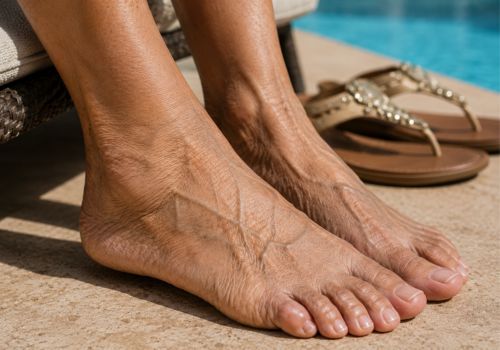
Most of us expect to see wrinkles on our faces or hands as we age, but we’re often surprised when the skin on our feet begins to change as well.
If the tops of your feet seem thinner, more fragile, or slightly “papery” than they once were, collagen loss may be playing a role.
Collagen is the most abundant structural protein in the body. It helps keep skin firm, smooth, and resilient. Unfortunately, collagen production naturally declines with age, and the process tends to accelerate during and after menopause.
As collagen and elastin levels fall, the skin gradually loses some of its thickness and elasticity.
The result can be skin that appears:
- Thinner and more delicate
- Crepey or tissue-paper-like
- Less firm and smooth
- More prone to fine lines and wrinkles
- Slower to recover from minor scratches or irritation
Many women also notice that marks on the feet seem to linger longer than they once did. Small scrapes, insect bites, or friction from sandals may leave behind temporary dark spots or uneven pigmentation that takes months rather than weeks to fade.
Sun exposure can make these changes even more noticeable.
Unlike the face, the tops of the feet are often overlooked when applying sunscreen, making them vulnerable to sun damage. Years of summer sandals, flip-flops, and walking barefoot can gradually contribute to uneven skin tone and visible signs of aging feet.
The good news is that while we can’t stop the aging process, we can support healthier-looking skin and help maintain its appearance for longer.
What Can Help?
Simple strategies include:
- Using a rich moisturizer regularly
- Protecting the tops of the feet with sunscreen during the summer
- Eating a nutrient-rich diet that supports healthy skin
- Staying well hydrated
- Avoiding harsh scrubs that can damage delicate skin
- Wearing supportive footwear that reduces friction
Some women also choose to support their skin through collagen supplementation alongside a healthy diet and lifestyle.
The goal isn’t perfection. Healthy feet often show signs of a life well lived. But a little extra care can help keep the skin looking smoother, stronger, and more vibrant.
4. Why Do Tendons Suddenly Stick Out?
Have you noticed that the tendons on the top of your feet also seem much more visible than they used to be?
Many women first notice this when they wear sandals or look down at their feet in bright sunlight. What once appeared smooth and soft may now look more defined, with tendons and bones standing out more clearly.
Part of this is due to the loss of cushioning and thinning skin we’ve already discussed. As the layers above the tendons become thinner, the structures underneath naturally become more visible.
But there’s another change happening as well.
Over time, the tendons and ligaments that support the foot gradually lose some of their elasticity and water content. These connective tissues become slightly stiffer and less flexible than they were in younger years.
At the same time, the arch of the foot can begin to flatten slightly.
This is a normal age-related change that occurs as the ligaments supporting the arch gradually stretch and weaken. As the arch lowers, the foot may become longer or wider than it once was.
This helps explain why some women suddenly discover that their usual shoe size no longer feels comfortable.
The combination of:
- Slight arch flattening
- Ligament changes
- Reduced cushioning
- More visible tendons
can make the feet look leaner, more angular, and less rounded than they did years ago.
The good news is that these changes are usually gradual and can often be managed with the right support.
What Can Help?
Simple habits can help maintain foot comfort and function:
- Wearing supportive shoes that properly support the arch
- Replacing worn-out footwear regularly
- Performing foot-strengthening exercises
- Stretching the calves and feet regularly
- Avoiding shoes that squeeze the toes or alter natural foot mechanics
Many women are surprised to learn that these structural changes are one reason feet can get bigger with age.
While we can’t completely stop the aging process, keeping the muscles, tendons, and ligaments of the feet strong and mobile can help them continue to support us comfortably for years to come.
5. Why Are My Heels So Dry?
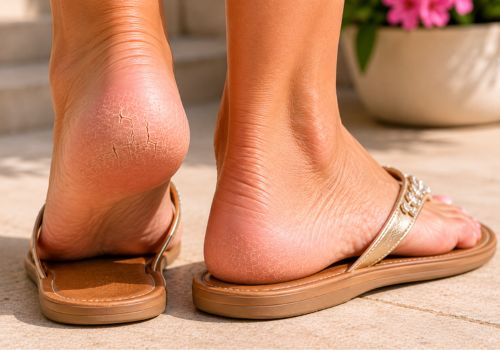
Of all the age-related changes that affect the feet, dry skin is probably the most common—and often the most frustrating.
Many women find that once they reach their 40s and 50s, their heels suddenly seem rougher, drier, and more prone to cracking, no matter how much moisturizer they use.
The reason is partly due to the unique structure of the feet.
Unlike most areas of the body, the soles of the feet contain no oil glands at all. They rely entirely on sweat glands and the body’s natural moisture balance to keep the skin supple.
As we age, several things begin to change.
Cell turnover slows down, meaning dead skin cells are shed less efficiently. At the same time, the skin’s ability to retain moisture gradually declines. Hormonal changes during menopause can also contribute to dryness throughout the body, including the feet.
Over time, this can lead to:
- Rough, thickened skin on the heels
- White or ashy-looking patches
- Persistent dryness that returns quickly
- Deep cracks in the skin, known as fissures
- Skin that feels hard rather than soft and flexible
Summer can make the problem worse.
Open-backed sandals expose the heels to friction, heat, and dry air, while frequent barefoot walking can place additional stress on already dehydrated skin.
The result is often a cycle where the skin becomes thicker in an attempt to protect itself, only to become rougher and more noticeable.
The good news is that dry heels are usually one of the easiest foot concerns to improve with consistent care.
What Can Help?
Simple habits can make a noticeable difference:
- Applying moisturizer daily rather than only when the skin feels dry
- Using creams containing urea or alpha-hydroxy acids (AHAs) to soften thick skin
- Wearing socks after moisturizing to help lock in hydration
- Avoiding overly aggressive scraping or filing
- Staying well hydrated throughout the day
If you’ve been relying on basic body lotion and seeing little improvement, don’t be discouraged. The thicker skin on the feet often needs more targeted care than other areas of the body.
Fortunately, that’s exactly where the next step comes in.
Other Changes You May Notice
As the years go by, some women also notice changes beyond skin and foot shape.
These may include:
- Thickened or discolored toenails, which may become more common as nails grow more slowly with age
- Increased susceptibility to nail fungus
- More prominent bunions
- Hammer toes or curled toes
- More noticeable calluses
- Occasional swelling after long periods of standing
Not every woman experiences these changes, and many can be managed with good foot care and properly fitting footwear.
When Foot Changes Are Not Just Aging
Most of the changes we’ve discussed are a normal part of getting older.
However, it’s important to remember that not every change affecting the feet should automatically be blamed on age or menopause.
Occasionally, foot symptoms can be a sign that something else is going on.
It’s worth speaking with a healthcare professional if you notice:
- Sudden swelling in one foot or leg
- Persistent pain that doesn’t improve
- A wound or sore that won’t heal
- Significant changes in skin colour
- Numbness, tingling, or loss of sensation
- Rapid changes in the shape of the foot
- New symptoms that appear suddenly rather than gradually
Conditions affecting circulation, nerves, joints, and overall health can sometimes first show up in the feet.
The goal isn’t to worry about every ache and wrinkle. It’s simply to know the difference between normal age-related changes and symptoms that deserve a closer look.
When in doubt, it’s always better to ask.
How To Make Aging Feet Look Better
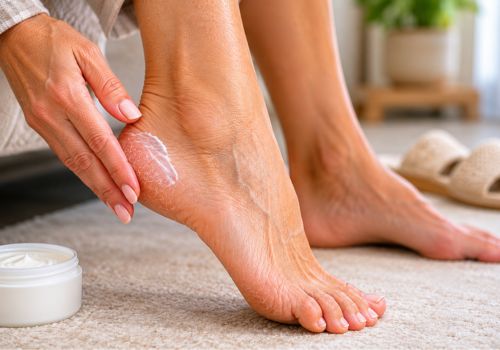
The good news is that while we can’t stop the natural aging process, we can improve how our feet look and feel.
Think of it as a facial for your feet.
Just as the skin on your face benefits from cleansing, exfoliation, hydration, and protection, your feet respond well to a little targeted care.
The goal isn’t perfection. It’s helping your feet stay comfortable, healthy, and sandal-ready at any age.
Many women notice improvements surprisingly quickly once they start addressing the specific changes we’ve discussed—dry skin, collagen loss, reduced cushioning, and circulation changes.
Let’s look at a few simple ways to give your feet the support they deserve.
1. Go Beyond Basic Moisturizer
If regular body lotion isn’t making much difference, the problem may not be hydration alone.
Over time, layers of dead skin can build up on the heels, making it difficult for moisture to penetrate properly.
Products containing urea or alpha-hydroxy acids (AHAs) can help soften and gently dissolve thickened skin while drawing moisture into the outer layers.
For best results:
- Apply after bathing or showering.
- Follow with a richer balm or oil to lock in moisture.
- Wear cotton socks overnight occasionally to maximise absorption.
Consistency matters more than expensive products.
A simple routine repeated regularly often produces the best results.
2. Support Your Aging Feet From The Inside
Healthy skin starts beneath the surface.
Staying well hydrated, eating adequate protein, and supporting natural collagen production can all contribute to healthier-looking skin over time.
Nutrients that support skin and connective tissue health include:
- Protein
- Vitamin C
- Zinc
- Omega-3 fatty acids
Some women also choose to support skin elasticity with collagen supplements.
3. Improve Circulation
Good circulation helps deliver oxygen and nutrients to the tissues of aging feet.
Simple habits can help:
- Walking regularly
- Elevating your feet after long periods of standing
- Gentle self-massage
- Stretching the calves and ankles
You may also enjoy dry brushing as part of your self-care routine.
4. Protect Your Natural Cushioning
If your feet feel less comfortable than they once did, support becomes increasingly important.
Consider:
- Well-cushioned footwear for aging feet
- Gel inserts
- Arch-supporting shoes
- Avoid long periods in bare feet on hard surfaces
Supporting the structures of the foot can make a remarkable difference to comfort and mobility.
5. Keep Your Aging Feet Strong
Your feet contain dozens of muscles, tendons, and ligaments that benefit from regular movement.
Simple exercises can help aging feet maintain strength, balance, flexibility, and stability.
For a simple routine, see our Happy Feet exercises.
Final Thoughts

If you’ve looked down recently and wondered why your feet seem different, you’re certainly not alone.
The truth is that our feet change just like the rest of our bodies.
Over the years, natural shifts in skin thickness, collagen, circulation, cushioning, and connective tissue gradually alter how our feet look and feel. What may seem like a sudden change is often the result of small adjustments that have been happening quietly for years.
The good news is that many of these changes are completely normal.
Visible veins, drier skin, more prominent tendons, and a little extra wear and tear don’t mean you’ve done anything wrong. They simply reflect a lifetime of walking, standing, working, exploring, caring for others, and carrying yourself through decades of life.
And while we can’t stop the clock, we can absolutely support our aging feet with better hydration, smarter footwear, regular movement, and a little extra care.
After all, your feet have carried you through every chapter of your life so far.
Perhaps they deserve a little appreciation in return.
So go ahead and wear the sandals.
Your feet have earned them.