The Forgotten Benefits of Bitter Foods
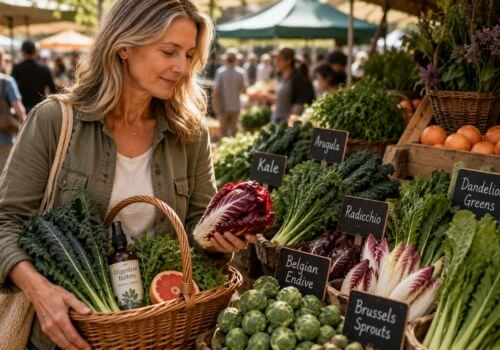
For generations, people finished a hearty meal with a small glass of bitter herbal liqueur or a few drops of herbal bitters, believing it would help settle the stomach and support digestion. Whether it was a traditional digestive schnapps in Germany, an Italian amaro, or another regional herbal tonic, bitter drinks were often considered the perfect ending to a meal.
Over time, these old traditions were gradually forgotten by many as our diets became sweeter and modern medicine offered new ways to treat digestive complaints. Today, many of us avoid bitter foods altogether, choosing milder vegetables and sweeter flavors instead.
But could we have overlooked something important?
In this article, we’ll explore what bitter foods are, why they’ve been valued in traditional diets for centuries, and what current research says about their potential role in digestion, gut health, and healthy aging.
Table of Contents
What Are Bitter Foods?
Bitter is one of the five basic tastes our tongues can detect, alongside sweet, sour, salty, and umami. Umami, a Japanese word meaning “pleasant savory taste,” is the rich, meaty flavor found naturally in foods like mushrooms, tomatoes, Parmesan cheese, soy sauce, and cooked meats.
While many people naturally prefer sweeter flavors, bitterness is found in a wide variety of vegetables, herbs, fruits, and plant-based foods that have been part of traditional diets for centuries.

Some common bitter foods include:
- Arugula (rocket)
- Radicchio
- Endive
- Chicory
- Dandelion greens
- Brussels sprouts
- Kale
- Broccoli rabe
- Grapefruit
- Green tea
- Coffee
- Dark chocolate (high cocoa content)
Many herbs also contain naturally bitter compounds and have traditionally been used to prepare digestive bitters. Gentian, dandelion root, artichoke leaf, wormwood, yarrow, and angelica have all been used traditionally in herbal preparations known as digestive bitters.
Although we often think of bitterness as a single flavor, it can be produced by hundreds of different naturally occurring plant compounds. These include polyphenols, flavonoids, terpenes, glucosinolates, alkaloids, and other phytochemicals that plants produce to protect themselves from insects, disease, and environmental stress.
Interestingly, many of these same plant compounds have become a focus of scientific research due to their potential role in supporting human health. However, not every bitter compound provides the same benefits, and a bitter taste alone doesn’t automatically make a food healthy.
How Do We Taste Food?
Every time you take a bite of food, your brain is processing an incredible amount of information. Almost instantly, your brain can distinguish whether a food is sweet, salty, sour, bitter, or rich and savory (umami). These different tastes help you identify what you’re eating and influence whether you want another bite.
This information comes from thousands of tiny taste buds, found mainly on the tongue, but also on the roof of the mouth and at the back of the throat. Each taste bud contains specialized taste receptor cells that act like microscopic sensors.
When molecules from food dissolve in your saliva, they bind to these receptors, which send electrical signals through nerves to your brain. Your brain then combines these signals with your sense of smell, the food’s texture, temperature, and even past experiences to create what we recognize as flavor.
Scientists currently recognize five basic tastes, each detected by its own specialized taste receptors:
Sweet – Detects sugars and other sweet compounds, helping us identify foods that provide a quick source of energy.
Salty – Detects sodium and other mineral salts, which are essential for many functions throughout the body.
Sour – Detects acids found in foods such as citrus fruits, vinegar, and fermented foods, helping us recognize acidity.
Bitter – Detects hundreds of different naturally occurring compounds, many of which are found in plants.
Umami – A Japanese word meaning pleasant savory taste. Umami detects amino acids, particularly glutamate, and is responsible for the rich, savory flavor found in foods such as mushrooms, tomatoes, Parmesan cheese, soy sauce, and cooked meats.
Why Doesn’t Everyone Taste Food the Same Way?
Although we all have the same five basic taste systems, no two people experience taste in the same way. Our genes influence how sensitive our taste receptors are, meaning one person may find a food pleasantly bitter while another finds it overwhelmingly strong. Researchers often describe people as:
- Non-tasters – experience relatively little bitterness.
- Medium tasters – fall somewhere in the middle.
- Supertasters – have a much stronger perception of bitter flavors.
Genetics isn’t the only factor. Age, certain medications, smoking, illness, and even repeated exposure to particular foods can all influence how we perceive different flavors over time. Many people find that foods they disliked as children become much more enjoyable as adults.
Cultural influences also play an important role. For example, people who grow up eating spicy foods often become much more tolerant of the burning sensation caused by chili peppers than those who rarely eat them.
While spiciness isn’t actually a taste—it’s a pain signal detected by heat-sensitive nerve receptors—regular exposure can make the sensation feel less intense and even enjoyable. Our taste preferences are shaped not only by our genes but also by the foods and flavors we experience throughout our lives.
These differences help explain why some people happily eat Brussels sprouts, kale, or grapefruit, while others avoid them altogether. As we’ll see in the next section, our ability to detect bitterness has played an important role throughout human evolution—and may have helped keep our ancestors alive.
Why Do We Taste Bitterness?
If bitterness can be found in many healthy foods, why did humans evolve to detect it in the first place?
Scientists believe our ability to taste bitterness developed as an important survival mechanism. Many naturally occurring plant toxins are bitter, so being able to recognize and avoid intensely bitter foods may have helped protect our ancestors from accidentally eating something poisonous.
However, the relationship between bitterness and toxicity isn’t as simple as it first appears.
Plants don’t produce bitter compounds just to make our vegetables less enjoyable. Many of these substances act as the plant’s own natural defense system, helping to protect it from insects, grazing animals, bacteria, fungi, and other environmental threats.
These defensive compounds include substances such as polyphenols, flavonoids, glucosinolates, terpenes, and alkaloids. While some can be toxic in high amounts, many are perfectly safe to eat and have become the subject of growing scientific interest because of their potential role in supporting human health.
This creates an interesting paradox. The very bitterness that once warned our ancestors to be cautious may also signal the presence of beneficial plant compounds. In other words, not everything that tastes bitter is harmful—and many bitter foods are among the healthiest plants we eat.
That doesn’t mean every bitter substance is good for us. Nature still contains poisonous plants, and bitterness can sometimes serve as an important warning sign. But in the fruits, vegetables, herbs, and other foods commonly eaten today, bitterness often reflects the presence of naturally occurring phytochemicals rather than danger.
Bitter Taste Receptors: They’re Not Just on Your Tongue
For many years, scientists believed bitter taste receptors had one simple job: helping us detect bitter foods on the tongue so we could decide whether they were safe to eat.
Over the past two decades, however, researchers have made a surprising discovery. The same family of bitter taste receptors—known as TAS2Rs—has been found in many other parts of the body, where they appear to perform functions completely unrelated to taste.
Today, scientists have identified bitter taste receptors in tissues including the:
- Stomach
- Small intestine
- Colon
- Pancreas
- Liver
- Gallbladder
- Airways and lungs
- Heart
- Immune cells
- Thyroid
- Bladder
- Skin
- Brain
Their exact roles are still being investigated, but growing evidence suggests these receptors may act as tiny chemical sensors, helping different organs detect naturally occurring bitter compounds and respond accordingly.
For example, bitter taste receptors in the digestive tract may help regulate the release of digestive hormones, influence stomach emptying, and affect the production of digestive juices. In the lungs, they appear to play a role in the body’s natural defense mechanisms, while receptors found on immune cells are being studied for their involvement in immune responses and inflammation.
Scientists are also exploring whether bitter taste receptors influence appetite, blood sugar regulation, metabolism, and the composition of the gut microbiome.
Although much of this research is still emerging, the discovery that these receptors are distributed throughout the body has fundamentally changed our understanding of why humans evolved to detect bitter compounds.
Instead of acting solely as taste sensors, bitter receptors may be part of a much larger communication system that helps the body monitor and respond to compounds found in the foods we eat.
Why Are Modern Foods Less Bitter?
Alongside changes in agriculture and food production, our approach to digestive health has also changed. For centuries, many families relied on bitter herbs, vegetables, and herbal digestifs to support digestion after meals.
During the twentieth century, however, over-the-counter medications for heartburn, acid reflux, and indigestion became increasingly available, providing a quick, convenient way to relieve digestive discomfort.
While these medicines are highly effective for many people and have an important place in healthcare, their widespread availability may also have contributed to the decline of traditional plant-based approaches and herbal remedies for supporting digestion that had been passed down through generations.
How Bitter Foods May Support Digestion
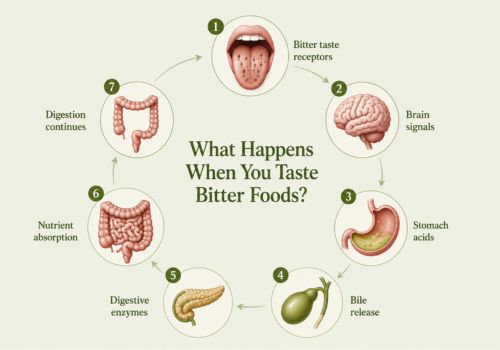
For centuries, bitter herbs and foods have been used before or after meals to support digestion. While many of these practices originated in traditional herbal medicine, modern research suggests there may be biological reasons why bitter foods can influence the digestive process.
When bitter compounds come into contact with taste receptors in the mouth, they don’t simply create the sensation of bitterness. They can also trigger what’s known as the cephalic phase of digestion—the body’s way of preparing the digestive system before food even reaches the stomach.
This early response may stimulate the release of saliva, stomach acid, digestive enzymes, and bile, helping the body break down food more efficiently. These digestive secretions are essential for absorbing nutrients, particularly fats and certain vitamins.
Bitter taste receptors found in the stomach and intestines may continue this process after food is swallowed. Research suggests they can influence the release of digestive hormones, help regulate stomach emptying, and communicate with the brain through the gut-brain axis, although scientists are still investigating exactly how these pathways work.
Some studies also suggest that activating bitter taste receptors may increase feelings of fullness after eating by influencing hormones involved in appetite regulation. However, the effects appear to vary depending on the type of bitter compound, the dose, and the individual.
Although the research is promising, it’s important to remember that much of it is still developing. Bitter foods shouldn’t be viewed as a cure for digestive problems, but including a variety of naturally bitter vegetables and herbs as part of a balanced diet may help support normal digestive function.
Did You Know?
Your digestive system starts preparing for a meal before food reaches your stomach. Simply seeing, smelling, chewing, and tasting food triggers the cephalic phase of digestion, encouraging the release of saliva and digestive secretions that help your body digest and absorb nutrients more efficiently.
Bitter Foods and Gut Health
Your gut is home to trillions of microorganisms that help digest food, produce certain vitamins, support your immune system, and influence many aspects of your overall health. Maintaining a healthy and diverse gut microbiome is increasingly recognized as an important part of healthy aging.
Scientists are now investigating whether the bitter compounds found in many vegetables, herbs, tea, coffee, and other plant foods may also benefit the gut beyond simply aiding digestion. Recent research has explored whether regular coffee consumption may be associated with a lower risk of serious liver disease.
Many bitter-tasting plants are naturally rich in polyphenols, flavonoids, and other phytochemicals that can act as food for beneficial gut bacteria. As these compounds are broken down by the microbiome, they produce smaller molecules that may help support the intestinal lining, reduce inflammation, and contribute to a healthy balance of gut microbes.
Some bitter compounds may also influence the production and release of bile acids. While bile is best known for helping digest fats, scientists now recognize that bile acids also act as signaling molecules that help regulate metabolism, the gut microbiome, and communication between the gut and other organs.
Researchers are also exploring whether bitter taste receptors in the intestines play a role in maintaining the gut barrier—the protective lining that controls what passes from the intestines into the bloodstream. Although this research is still in its early stages, it suggests that bitter compounds may influence gut health through several different pathways rather than a single mechanism.
Rather than relying on one “superfood,” the evidence suggests that regularly eating a wide variety of plant foods—including naturally bitter vegetables and herbs—may be one of the best ways to support a healthy gut microbiome.
What Can You Do to Support Digestion?
Supporting healthy digestion doesn’t have to be complicated. Including a variety of naturally bitter vegetables, herbs, and other plant foods in your diet is one of the simplest ways to increase your intake of bitter compounds while also benefiting from the fiber, vitamins, minerals, and phytochemicals they provide.
If you don’t enjoy bitter foods, don’t have them readily available, or prefer not to consume traditional alcoholic digestive bitters, alcohol-free bitter sprays, drops, or tinctures made from herbs such as gentian, dandelion, artichoke, or angelica are another option.
Digestive bitter sprays are often the most convenient choice, as they can be used directly in the mouth without water and are easy to carry in a handbag or while traveling.
Digestive bitter drops are usually added to a small amount of water or another drink before use, while tinctures are liquid herbal extracts that may be taken on their own or diluted, depending on the manufacturer’s instructions. The best option often comes down to personal preference and convenience.
These products are most commonly taken 10–15 minutes before a meal, allowing the bitter taste to stimulate the cephalic phase of digestion. This early digestive response may increase the production of saliva, stomach acid, digestive enzymes, and bile, helping prepare the body for the food that’s about to arrive.
However, bitters are also traditionally taken after meals to support digestion or relieve feelings of fullness after a large or rich meal. For this reason, bitter herbal digestives have traditionally been enjoyed after meals in many parts of Europe.
Despite its long history as a digestive aid, scientific research on commercial products is still limited. Most studies have focused on individual bitter compounds or whole foods rather than specific over-the-counter preparations.
For this reason, eating a varied diet rich in naturally bitter vegetables, herbs, and other plant foods remains the best-supported approach for supporting digestion and overall gut health.
Easy Ways to Add More Bitter Foods to Your Diet
You don’t need to overhaul your diet overnight or force yourself to eat foods you dislike. Like many flavors, bitterness is something your taste buds can gradually adapt to over time. Starting with milder bitter foods and slowly introducing stronger flavors can make the transition much easier.
Here are a few simple ideas:
- Add a handful of arugula (rocket) or radicchio to your regular salad instead of replacing all your lettuce.
- Roast Brussels sprouts, broccoli, or broccoli rabe with olive oil to help balance their natural bitterness.
- Include kale or dandelion greens in soups, stews, or smoothies.
- Enjoy a cup of green tea instead of a sugary drink.
- Choose dark chocolate with at least 70% cocoa as an occasional treat.
- Experiment with herbs such as dandelion, gentian, or artichoke if you’re interested in traditional digestive bitters.
The goal isn’t to eat as many bitter foods as possible. Instead, aim for a varied, plant-rich diet that naturally includes a range of flavors—including some bitterness. Diversity is one of the keys to supporting a healthy gut microbiome and overall health.
Could Bitter Foods Be More Important After 40?

As we get older, our digestive system naturally changes. Many people find they don’t digest large meals as easily as they once did, experience more bloating or constipation, or simply feel full for longer after eating.
Changes to the gut microbiome, metabolism, and digestive function are all a normal part of aging. For women, hormonal changes during perimenopause and menopause may contribute to some of these changes, while men also experience age-related changes in digestion and metabolism.
Although bitter foods aren’t a cure for digestive problems or age-related health conditions, they may become a valuable part of a healthy diet as we get older.
Many naturally bitter vegetables and herbs are rich in fiber, vitamins, minerals, polyphenols, and other plant compounds that support digestive health, a diverse gut microbiome, and overall well-being. They may also encourage us to eat a wider variety of plant foods, increasing the range of beneficial phytochemicals in our diet.
Researchers are also investigating whether certain bitter compounds influence appetite, blood sugar regulation, metabolism, and inflammation through bitter taste receptors found throughout the digestive tract. While these findings are promising, much of the research is still emerging, and more human studies are needed before firm conclusions can be drawn.
Rather than looking for a single “superfood” or quick fix, the evidence suggests that regularly eating a diverse range of plant foods—including naturally bitter vegetables and herbs—may be one simple way to support healthy aging.
Lillepin Takeaway
For centuries, people have believed that bitter foods and herbs could support digestion. Modern research is beginning to uncover some of the biological mechanisms that may explain these traditional practices, from stimulating the early stages of digestion to the discovery of bitter taste receptors throughout the body.
While scientists are still learning exactly how these receptors influence our health, the evidence suggests that naturally bitter vegetables and herbs can be a valuable part of a balanced, plant-rich diet.
Rather than relying on a single food or supplement, eating a wide variety of colorful plant foods—including some with a naturally bitter taste—may help support digestion, gut health, and healthy aging.
Whether you enjoy arugula in a salad, sip a cup of green tea, or occasionally use alcohol-free herbal bitters, embracing a little bitterness may be one simple way to add more variety—and potentially more beneficial plant compounds—to your daily routine.
Related Lillepin Research
P2-044 — Could Your Gut Influence Estrogen? New Research Suggests It Might
A 2026 PNAS study suggests the gut microbiome may play a larger role in estrogen recycling and hormone regulation than previously understood.
→ Read the full article: Could Your Gut Influence Estrogen? New Research Suggests It Might
P2-040 — Your Gut Does Not Stay the Same After Menopause
New research shows that menopause changes the gut microbiome, reducing bacterial diversity and altering microbes involved in estrogen metabolism, inflammation, and metabolic health. Scientists believe these changes may contribute to many common menopause symptoms and could play an important role in healthy aging.
→ Read the full article: Your Gut Does Not Stay the Same After Menopause.
P2-105 — Could Your Morning Coffee Help Protect Your Liver? A large 2026 prospective study found that regular coffee consumption was associated with a lower risk of cirrhosis, liver cancer, and liver-related death, alongside healthier markers of liver health. → Read the full article: Could Your Morning Coffee Help Protect Your Liver?