Late-Onset Menopause: Pros and Cons
The average age for a woman to reach natural menopause is around 51. However, for a notable portion of the population, the biological clock runs a little slower. If you’re still menstruating in your late 50s or beyond, you are experiencing what is known as Late-Onset Menopause.
Late-onset menopause is medically defined as occurring after the age of 55, and it is not a disorder but referred to as a variation of normal. While menopause statistics vary globally, it’s estimated that roughly 11% of women experience menopause after 55.
This unique timing carries a complex set of trade-offs that profoundly impact long-term health and wellness. Causes often have a genetic component, but other factors can also play a role in this delay. So is late-onset menopause an advantage or a disadvantage? Let’s find out:
Table of Contents
Biological Factors Behind Late-Onset Menopause
The timing of menopause is largely governed by the finite supply of oocytes (eggs) a woman is born with, known as the ovarian reserve. Late-Onset Menopause (LOM), occurring after the average age of 51, is primarily a reflection of a larger or more robust initial follicular pool or a slower rate of follicle depletion over the woman’s lifespan.
Recent research has also suggested that women with a longer reproductive lifespan and a later menopause may show signs of slower biological aging, although scientists are still investigating exactly how these relationships are connected.
Genetic Blueprints: Heredity, BMI, and Ovarian Reserve
Genetics play the most significant role, with the age of a woman’s mother or sisters often being the strongest predictor of her own menopausal timing.
Beyond heredity, other biological and lifestyle factors contribute to the delay: a higher body mass index (BMI) is often implicated, as adipose (fat) tissue produces a form of estrogen called estrone through a process called aromatization, which can provide a continuous low-level hormonal signaling that slightly prolongs ovarian function.
Lifestyle and Reproductive History Factors
Additionally, factors like a lack of smoking history (smoking is known to deplete ovarian reserve prematurely), a higher number of lifetime ovulatory cycles (often due to being nulliparous, or having fewer pregnancies), and overall better general metabolic health — including a well-supported gut microbiome — can all contribute to preserving the ovarian supply, allowing the body to sustain its reproductive cycle well into the late 50s.
Can You Naturally Delay Menopause?

Given that genetics are the strongest predictor of menopausal timing, the idea of significantly delaying Late-Onset Menopause (LOM) through lifestyle choices alone is largely a myth. While it is impossible to generate new eggs or reverse the natural process of ovarian reserve depletion, healthy behaviors can help prevent premature ovarian damage.
Maintaining a healthy metabolic profile — including stable blood sugar regulation, avoiding behaviors known to speed up follicular loss (such as smoking, which severely depletes the ovarian supply), and minimizing exposure to environmental toxins- is the best way to ensure you do not inadvertently trigger an earlier onset.
Ultimately, women with LOM have simply won the “genetic lottery” regarding their natural reserve; while a healthy lifestyle supports overall well-being, it cannot fundamentally extend the finite window set by your DNA.
Why Doctors Know More About Early Menopause Than Late-Onset Menopause
In contrast to late-onset, early menopause is a medical priority. This is the reason why the medical community often focuses less on Late-Onset Menopause (LOM) and more on the opposite end of the spectrum: Early Menopause and Premature Ovarian Insufficiency (POI). Approximately 5-7% of women experience Early Menopause (before age 45), and about 1% experience POI (before age 40).
Because these cases result in decades of lost protective estrogen, they carry severe long-term health risks, including a much higher risk of early osteoporosis and heart disease. Therefore, these patients are an urgent priority for diagnosis and immediate Hormone Replacement Therapy (HRT).
This is a primary reason why doctors, whose training heavily emphasizes high-risk cases and the average onset age of 51, may be less specialized in managing LOM, which is considered a low-incidence, “variation of normal.”
Delayed Menopause Symptoms: Is the Experience Different?
For those with Late-Onset Menopause, the experience of the menopausal transition (perimenopause) can be distinct from those who enter it in their 40s — a phase that can bring a wide range of changes, often far beyond what most women expect.
While some studies suggest that extended exposure to natural hormones may offer a smoother transition, with hot flashes tending to be of shorter overall duration and often less severe, this is not universally true. Symptoms can be just as pronounced, or even more so, with late onset.
Late-onset Menopause: Severity of Symptoms
The severity of symptoms is different from one individual to another, and often depends less on the age of onset and more on the rate of hormonal decline and individual sensitivity to these changes.
Furthermore, women entering menopause later are often managing other life stressors, like caring for aging parents or grandchildren, or dealing with mid-career demands, which can amplify the perception of symptoms like insomnia, anxiety, and fatigue.
The Emotional Toll: Perimenopause Fatigue and Systemic Shock
Some women also experience a degree of emotional fatigue from the prolonged uncertainty of the perimenopausal phase, wishing for the finality of their cycle to conclude.
The sudden, final cessation of periods at an older age, especially if the preceding perimenopause was turbulent, can often feel like a profound and symptomatic shock to the system.
Delaying GSM: Extended Estrogen Benefits and Sexual Health
The underlying biology is not fundamentally different; it’s still a decline in ovarian function, but the context and rate of decline are key factors in symptom experience.
Symptoms primarily related to tissue thinning due to estrogen deficiency, such as vaginal dryness and painful intercourse (Genitourinary Syndrome of Menopause or GSM), may also be delayed, improving overall sexual well-being for a longer period.
Weight Loss with Late-Onset Menopause – The Double Whammy
While the extended period of natural estrogen exposure is protective for bones and heart health, women with Late-Onset Menopause still face the significant metabolic challenge of trying to lose weight at an older age. The difficulty is less about the “late” timing of menopause and more about the combination of hormonal decline and the natural aging process.
Metabolism Slowdown: Sarcopenia, Estrogen, and Visceral Fat
By the time women reach their late 50s or 60s, age-related muscle loss (sarcopenia) has often significantly slowed their resting metabolic rate (RMR).
Additionally, the decline in estrogen, regardless of when it occurs, triggers an unfavorable redistribution of body fat, shifting accumulation from the hips and thighs to the more metabolically risky abdominal or visceral area.
This shift is often accompanied by a rise in low-grade chronic inflammation (sometimes referred to as inflammaging), which further impacts metabolism, fat storage, and overall long-term health.
Compounded Weight Loss Challenge & RMR Solutions
Therefore, a woman experiencing menopause at 58 is dealing with the estrogen-related shift and a slower metabolism due to her age, making it a compounded challenge to shed pounds compared to a woman who hits menopause earlier.
This metabolic shift is also closely linked to insulin resistance, which becomes more common during menopause and can make fat loss significantly harder despite maintaining the same diet and activity levels.
The essential strategy remains the same: a focus on increased resistance (strength) training to build muscle and reverse RMR (reversing Resting Metabolic Rate) decline, alongside a necessary reduction in total caloric intake to compensate for the slower metabolism.
Late Menopause: The Great Trade-Off (Health Benefits vs. Cancer Risk)
The most significant aspect of Late-Onset Menopause is the sheer length of time the body remains exposed to its own protective estrogen. This prolonged hormonal exposure has been reliably linked to several major long-term benefits of late menopause.
Estrogen plays a critical role in bone density maintenance, meaning these women generally enjoy stronger bones for a longer period, resulting in a significantly reduced risk of osteoporosis and bone fractures later in life. Similarly, estrogen offers protective effects on the cardiovascular system.
Women with delayed menopause often have a lower risk of cardiovascular disease and stroke compared to women who enter menopause early. Furthermore, the sustained hormonal environment is hypothesized to be associated with an improved long-term cognitive outlook, potentially reducing the risk of conditions like dementia.
The Trade-Off: Cancer Risk and Vigilant Screening
However, this extended exposure is a double-edged sword. The single major downside is the slightly elevated risk of certain cancers. The increased lifetime exposure to estrogen is associated with a marginal, but measurable, rise in the risk for hormone-sensitive cancers, specifically breast cancer, endometrial cancer (cancer of the uterine lining), and to some degree, ovarian cancer.
This fact makes regular, vigilant screening, including mammograms and any necessary follow-up for unusual bleeding, an absolute necessity for this group. The risk is often compounded by the endometrium being exposed to estrogen without the counterbalancing effect of progesterone for a longer period.
A Vital Note on Bleeding: Any vaginal bleeding, spotting, or discharge after 12 consecutive months without a period (i.e., after you have been medically diagnosed as menopausal) must be immediately investigated by your doctor to rule out endometrial cancer.
Navigating HRT After 60 & Exploring Non-Hormonal Menopause Alternatives
For women experiencing Menopause After 55, the conversation around Hormone Replacement Therapy (HRT) requires careful consideration. Current medical consensus often refers to the “timing hypothesis,” which suggests that systemic HRT is safest and most beneficial when started within 10 years of the final menstrual period or before the age of 60.
If your menopause onset pushes past the age of 60, starting systemic HRT after 60 is often approached with more caution, as the risks of developing blood clots, stroke, and certain cardiovascular events are higher. In these cases, a low-dose, non-oral delivery method (like a patch or gel) is preferred, but many women choose to pursue HRT Alternatives entirely.
Evidence-Based Alternatives to Systemic HRT
For relief from hot flashes and night sweats (vasomotor symptoms), effective non-hormonal prescription medications are available. These include the newer class of drugs like the Neurokinin Antagonists, which directly target the brain’s temperature regulation center.
Older, well-established alternatives include low-dose versions of certain antidepressants, such as SSRIs/SNRIs, and in some cases, nerve pain medications, which are especially helpful for night sweats and improving sleep.
Treating GSM with Low-Dose Vaginal Estrogen
For localized symptoms like vaginal dryness, pain during intercourse, and urinary discomfort (GSM), highly effective local treatments exist.
While technically hormonal, very low-dose vaginal estrogen (creams, tablets, or rings) is considered a safe alternative to systemic HRT, as it provides localized relief with minimal absorption into the bloodstream.
Beyond Hormones: Mind-Body Therapies and Local Solutions
Non-hormonal options include regular use of specialized vaginal moisturizers and lubricants, and oral or vaginal drugs that specifically improve vaginal tissue health.
Beyond medication, Mind-Body interventions like Cognitive Behavioral Therapy (CBT) and Clinical Hypnosis have proven effective at reducing the bother and severity of hot flashes and improving sleep quality.
Important!
Always seek personalized medical advice from a qualified healthcare provider before starting or stopping any treatment, as only a doctor can determine the best and safest approach for your specific health profile.
Natural Menopause Supplements: What the Evidence Says
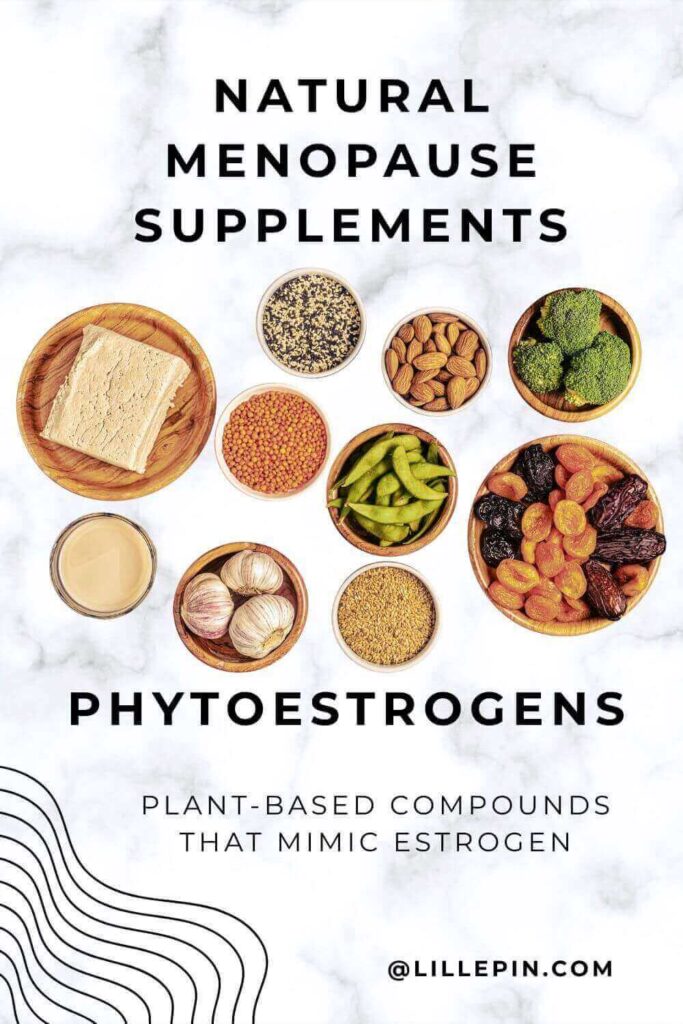
The market is saturated with “natural menopause supplements,” primarily consisting of phytoestrogens (plant-based compounds that weakly mimic estrogen) and various herbs.
While many women are drawn to this approach, scientific evidence generally shows that these supplements are not as potent or reliable as prescription HRT and often produce mixed or inconclusive results.
Phytoestrogens or Pharmaceutical Options?
Phytoestrogens like soy isoflavones and red clover may offer a modest reduction in hot flashes, but they are typically not as effective as pharmaceutical options.
Popular herbs like Black Cohosh have been the subject of conflicting research; while some studies show benefit, other trials have often found no significant difference compared to a placebo. It is vital to remember that supplements are not regulated by the FDA for purity or efficacy, and even natural compounds can interact seriously with prescription medications.
Supplements, Safety, and Your Personalized LOM Strategy
Women with Late-Onset Menopause should approach these products with cautious optimism and always consult their healthcare provider before starting any supplement to ensure safety and check for potential drug interactions.
Ultimately, managing delayed menopause requires a personalized approach that balances the benefits of long-term natural estrogen exposure with the slightly elevated cancer risks, using evidence-based medical and lifestyle strategies for symptom control.
Final Word: Balancing Risk, Benefits, and Personalized Care
Managing Late-Onset Menopause (LOM) means navigating a unique health equation: balancing the valuable, decades-long protection of natural estrogen against a slightly elevated risk for hormone-sensitive cancers — which plays a central role in metabolism, bone health, and overall resilience during midlife
It is crucial to understand that while LOM is a “variation of normal,” the challenges of weight management and the careful consideration of HRT after 60 require a personalized strategy focused on evidence-based solutions — especially when symptoms feel overwhelming and need to be addressed step by step.
The ultimate goal is to move beyond the uncertainty of the transition by adopting proactive lifestyle changes, prioritizing vigilant screenings, and working closely with a healthcare team specialized in menopause to tailor a plan for symptom control and long-term health.
We want to hear your story: When did your menopause begin? What were your main symptoms, and how strong were they? Help other women and share your experience in the comments below!
Related Lillepin Research
P4-015 → Read the full article: Could Your First Period and Menopause Predict How You Age?
P1-035 → Read the full article: AI Just Revealed a Hidden Truth About Menopause
P4-015 → Read the full article: Could Your First Period and Menopause Predict How You Age?
P1-054 → Read the full article Scientists Discover a Surprising Connection Between Your Bones and Your Brain